
Sunday, September 23, 2012
Manulife expands into Cambodia
The Phnom Penh Post
Friday, 14 September 2012 Stuart Alan Becker
 Manulife Cambodia's CEO and GM Robert Elliott.
Canadian insurance giant Manulife has made a bold move into Cambodia with an effort to train a new generation of insurance professionals and teach local people about life insurance.
Headquartered in Toronto with principal operations in Asia, Canada and the United States, the financial services giant earned US$132 million net income during 2011, with 26,000 employees, and celebrates its 125th anniversary this year.
General Manager and CEO Robert J Elliott, a Manulife veteran, spent a good part of his childhood in British Malaya and joined Manulife in 1980 on a management trainee program.
Elliott is proud to have built up in Sheffield, Yorkshire the number-one Manulife agency in the United Kingdom during his early career. He’s also proud that Manulife is veteran Asian company, having established offices in Hong Kong and Shanghai in 1897. Today, Manulife has offices in Indonesia, Japan, Singapore, Malaysia, Thailand, the Philippines, Vietnam, Hong Kong, Taiwan and China.
Manulife’s newest operation is here in Phnom Penh, which opened in June just off Russian Boulevard with fifty employees and about 290 sales staff in Phnom Penh.
“We have trainees coming in who are interested in learning more about this industry,” Elliott said.
“We are taking them on board, training them and sharing with them the whole concept of life insurance.”
Elliott said all of Manulife’s policies in Cambodia are life insurance policies.
“We’re starting out very simply with a protection term plan which runs for ten years, and we will be building on that and introducing life insurance policies with savings components as we start to build up the expertise and knowledge,” he said.
Manulife is the first wholly foreign-owned life insurance company operating in Cambodia.
“It is a great honor to be the first such wholly foreign-owned company,” he said.
“We are challenged to find actuaries, finance people and IT people. We are committed to helping people develop these skills and work with the regulator and the government to develop a viable industry here in Cambodia,” he said.
“What’s interesting about Manulife is our association with Asia goes back so long and when you think of the foresight of the people who did that, it’s a great testament to their vision and it is a great demonstration of the commitment that the company has got to this part of the world.”
Elliott said Manulife received the approval in principle to setting up an insurance company in Cambodia from the Ministry of Economy and Finance in October, 2011,and Manulife had the operating license granted on June 28, 2012.
“We are here to stay and that is important to our clients. Manulife is a company that is committed to this territory.”
Elliott said Cambodia presented an opportunity to help people build security in the long term for themselves.
“People can start planning their own financial independence,” he said.
Elliott said one of three things would happen to every person: either they would live too long, die to soon or get ill.
“In the Western world people are living thirty years after retirement and running out of money and the governments cannot look after them. They have to tax the working population to look after them so financial independence is important.”
If people die too soon, it means they are not going to earn the money they thought they were going to earn to take care of their families, Elliott said.
“You start out in life young and healthy with a young family. Most people don’t understand what their potential income is, but it is at least ten times their annual income. You get the opportunity to underwrite your life financially, so if anything happens to you there will be money to look after your loved ones.”
For those who get ill, Elliott says, insurance can cover their expenses.
“You have the opportunity to protect your family, and if anything happens to you, your family will be looked after. If you live a long time, you have the opportunity to cash out,” he said. “In time, we will develop this suite of products.”
He said the most important thing was to get the life insurance industry established.
“We will establish this industry by working with the regulator ad helping people understand the value of life insurance. We will have a program of educational seminars and invite the public to learn about the concept and how it works.”
Elliott said Asia was Manulife’s growth engine.
“Our medium-term goal is to be a premier pan-Asian life insurer, and expanding into Cambodia fits well into our pan Asian growth plan. We are confident that we can repeat our success in Cambodia just as we have in other ASEAN countries in the region.”
He said given that the Cambodian life insurance market was in its infancy, Manulife was we committed to work with Cambodia’s Ministry of Economy and Finance and other industry participants to establish a healthy and strong life insurance market in Cambodia.
“As part of establishing the life insurance industry, we are committed to continuous consumer education and developing the industry through training in concert with the local universities. It is a very exciting opportunity and I am very much looking forward to it,” he said.
Elliott was appointed to his Cambodia position in August and takes up the permanent position starting in October. He previously served in Hong Kong for five years, Singapore for three years and the United Kingdom for 13 years.
He and his wife Karen will be taking up a residence in Tonle Bassac.
Source: http://www.phnompenhpost.com/index.php/Special-Reports/manulife-expands-into-cambodia.html
Manulife Cambodia's CEO and GM Robert Elliott.
Canadian insurance giant Manulife has made a bold move into Cambodia with an effort to train a new generation of insurance professionals and teach local people about life insurance.
Headquartered in Toronto with principal operations in Asia, Canada and the United States, the financial services giant earned US$132 million net income during 2011, with 26,000 employees, and celebrates its 125th anniversary this year.
General Manager and CEO Robert J Elliott, a Manulife veteran, spent a good part of his childhood in British Malaya and joined Manulife in 1980 on a management trainee program.
Elliott is proud to have built up in Sheffield, Yorkshire the number-one Manulife agency in the United Kingdom during his early career. He’s also proud that Manulife is veteran Asian company, having established offices in Hong Kong and Shanghai in 1897. Today, Manulife has offices in Indonesia, Japan, Singapore, Malaysia, Thailand, the Philippines, Vietnam, Hong Kong, Taiwan and China.
Manulife’s newest operation is here in Phnom Penh, which opened in June just off Russian Boulevard with fifty employees and about 290 sales staff in Phnom Penh.
“We have trainees coming in who are interested in learning more about this industry,” Elliott said.
“We are taking them on board, training them and sharing with them the whole concept of life insurance.”
Elliott said all of Manulife’s policies in Cambodia are life insurance policies.
“We’re starting out very simply with a protection term plan which runs for ten years, and we will be building on that and introducing life insurance policies with savings components as we start to build up the expertise and knowledge,” he said.
Manulife is the first wholly foreign-owned life insurance company operating in Cambodia.
“It is a great honor to be the first such wholly foreign-owned company,” he said.
“We are challenged to find actuaries, finance people and IT people. We are committed to helping people develop these skills and work with the regulator and the government to develop a viable industry here in Cambodia,” he said.
“What’s interesting about Manulife is our association with Asia goes back so long and when you think of the foresight of the people who did that, it’s a great testament to their vision and it is a great demonstration of the commitment that the company has got to this part of the world.”
Elliott said Manulife received the approval in principle to setting up an insurance company in Cambodia from the Ministry of Economy and Finance in October, 2011,and Manulife had the operating license granted on June 28, 2012.
“We are here to stay and that is important to our clients. Manulife is a company that is committed to this territory.”
Elliott said Cambodia presented an opportunity to help people build security in the long term for themselves.
“People can start planning their own financial independence,” he said.
Elliott said one of three things would happen to every person: either they would live too long, die to soon or get ill.
“In the Western world people are living thirty years after retirement and running out of money and the governments cannot look after them. They have to tax the working population to look after them so financial independence is important.”
If people die too soon, it means they are not going to earn the money they thought they were going to earn to take care of their families, Elliott said.
“You start out in life young and healthy with a young family. Most people don’t understand what their potential income is, but it is at least ten times their annual income. You get the opportunity to underwrite your life financially, so if anything happens to you there will be money to look after your loved ones.”
For those who get ill, Elliott says, insurance can cover their expenses.
“You have the opportunity to protect your family, and if anything happens to you, your family will be looked after. If you live a long time, you have the opportunity to cash out,” he said. “In time, we will develop this suite of products.”
He said the most important thing was to get the life insurance industry established.
“We will establish this industry by working with the regulator ad helping people understand the value of life insurance. We will have a program of educational seminars and invite the public to learn about the concept and how it works.”
Elliott said Asia was Manulife’s growth engine.
“Our medium-term goal is to be a premier pan-Asian life insurer, and expanding into Cambodia fits well into our pan Asian growth plan. We are confident that we can repeat our success in Cambodia just as we have in other ASEAN countries in the region.”
He said given that the Cambodian life insurance market was in its infancy, Manulife was we committed to work with Cambodia’s Ministry of Economy and Finance and other industry participants to establish a healthy and strong life insurance market in Cambodia.
“As part of establishing the life insurance industry, we are committed to continuous consumer education and developing the industry through training in concert with the local universities. It is a very exciting opportunity and I am very much looking forward to it,” he said.
Elliott was appointed to his Cambodia position in August and takes up the permanent position starting in October. He previously served in Hong Kong for five years, Singapore for three years and the United Kingdom for 13 years.
He and his wife Karen will be taking up a residence in Tonle Bassac.
Source: http://www.phnompenhpost.com/index.php/Special-Reports/manulife-expands-into-cambodia.html


Sunday, August 5, 2012
Master's Thesis: Performance Management in Cambodian Civil Service (2011)
Master's Thesis on Performance Management in Cambodian Civil Service, published in 2011, Yokohama National University. The following is an abstract.
ABSTRACT:
Performance reform in Cambodian bureaucracy has just surfaced in recent years after three decades of negligence caused by the devastating civil war. Initial public administrative reform (PAR) efforts in the 1990s were hindered by political struggle and peace and security policy. The most striking PAR has been made since the early 2000s starting with the civil service census, employment and remuneration restructuring. In this context, the main finding is that performance management is still at very rudimentary stage while its quest to institutionalize this system for the whole bureaucracy still has a long way to go. The study concludes that the reasons attributed to this late performance management reform are the civil war which lasted from 1970 to 1999 and followed by politicization of the civil service. Furthermore, below substance salaries and lack of effective meritocratic mechanisms are attributable to poor performance of the public administration. In addition, although the size of the civil service does not exceed the public needs, shortage of staff in education and health sectors also has negative impact on the public sector performance. Therefore, some fundamental prerequisites are needed to entrench performance management in this bureaucracy.
Sunday, May 6, 2012


Monday, April 30, 2012

Tuesday, November 1, 2011

Cambodia seeks to uplift workers as it sets up college
By Guy De Launey BBC News, Phnom Penh
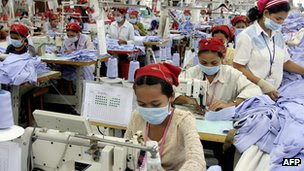
This is not school the way many of us would remember it. For starters, heads are not lolling on desks, willing the bell to ring and bring the agony to an end.
Instead the rows of students are bright-eyed, alert and turned out in eye-catching white-and-orange polo shirts.
They respond eagerly to the teacher's prompts and questions, occasionally breaking into good-natured laughter.
The bonhomie is all the more impressive considering this is a Sunday and classes started not long after six in the morning.
But the students are aware that the Garment Factory Supervisors' College offers an opportunity for something rarely seen in Cambodia: career progression.
And these young people - mostly women in their 20s - have willingly given up their weekends for a crash course in subjects like the labour law and occupational health and safety.
'Lot of conflict'
The garment and footwear industry is Cambodia's biggest employer. Almost 400,000 people work in the factories, producing clothes for big names like Gap, Adidas and Marks & Spencer.
Continue reading the main story
“
Start Quote
It will maintain high productivity, bring better communication and ensure the labour law will be clearly communicated to the workers”
Nov Dara
Better Factories Cambodia
Almost all of them are on the lowest pay grade, earning a minimum basic wage of $61 (£38) a month.

Overtime and seniority bonuses can push that into three figures, but until recently there was little chance of workers moving out from behind their sewing machines and into better-paying jobs.
The "us and them" divide between workers and management was stark. With little history of industrialisation before the garment industry took off a decade ago, there was a serious local skills shortage.
So not only were the garment factories largely owned by non-Cambodian companies, but most of the supervisory staff were expatriates as well, brought in from countries like China, Singapore and Bangladesh.
With little in the way of shared language or culture, workplace misunderstandings were frequent and so were the resulting disputes.
"Working across cultures they might have a lot of issues, a lot of conflict," says Nuon Laong.
Usually a factory adviser for the Better Factories Cambodia programme run under the auspices of the International Labour Organisation (ILO), Laong indulges in some officially-sanctioned moonlighting as a teacher at the Supervisors' College on Sundays.
"Often problems start from a small issue - but they don't understand each other, and then it becomes a big issue. But if there are local people [working as supervisors] they can understand each other and any problems are going to be smaller."
Ensuring sustainability
Promoting local staff to supervisor status also makes sense for the people without whom Cambodia's garment industry would not exist: the buyers.
The backs of the students' polo shirts bear the names of some of the most familiar global fashion brands - showing their support for the college set up by the ILO.
The college hopes to provide garment workers with better career opportunities
This is not entirely altruistic. Local staff are less expensive than expats - lowering costs for factories and buyers alike.
But with price pressure always a factor in the garment sector, it is a measure which could ensure the long-term health of the industry in Cambodia.
"To ensure the sustainability of the garment industry, we need Cambodian supervisors to take over the role of the foreigners," says Nov Dara, the Better Factories Cambodia training manager.
"This is the goal for the Cambodian government and the Chinese factory management. It will maintain high productivity, bring better communication and ensure the labour law will be clearly communicated to the workers."
That idea is clearly getting across to the trainees at the college. A supervisor from one nearby factory rattled off a few facts about the labour law as she enjoyed her lunch break.
Morale booster
But perhaps the most important contribution could be to morale on the factory floor.
A recent series of well-publicised mass-fainting incidents has left question marks over Cambodia's hard-won image as a country which guarantees decent working conditions in the garment sector.
The college addresses this by adding pastoral care to the curriculum.
The new supervisors get information about issues ranging from reproductive health to career development, which it is hoped they will pass on to their junior colleagues.
To make the message stick, the facts come wrapped in a music and comedy performance, courtesy of a local performing arts group, which has the audience hooting with laughter and clapping along.
Hundreds of new supervisors will have received training by the time the college finishes its short run of Sunday classes in November.
If they can put what they have learned into practice, they may play an important part in making sure Cambodia's garment industry has a healthy future.

This is not school the way many of us would remember it. For starters, heads are not lolling on desks, willing the bell to ring and bring the agony to an end.
Instead the rows of students are bright-eyed, alert and turned out in eye-catching white-and-orange polo shirts.
They respond eagerly to the teacher's prompts and questions, occasionally breaking into good-natured laughter.
The bonhomie is all the more impressive considering this is a Sunday and classes started not long after six in the morning.
But the students are aware that the Garment Factory Supervisors' College offers an opportunity for something rarely seen in Cambodia: career progression.
And these young people - mostly women in their 20s - have willingly given up their weekends for a crash course in subjects like the labour law and occupational health and safety.
'Lot of conflict'
The garment and footwear industry is Cambodia's biggest employer. Almost 400,000 people work in the factories, producing clothes for big names like Gap, Adidas and Marks & Spencer.
Continue reading the main story
“
Start Quote
It will maintain high productivity, bring better communication and ensure the labour law will be clearly communicated to the workers”
Nov Dara
Better Factories Cambodia
Almost all of them are on the lowest pay grade, earning a minimum basic wage of $61 (£38) a month.

Overtime and seniority bonuses can push that into three figures, but until recently there was little chance of workers moving out from behind their sewing machines and into better-paying jobs.
The "us and them" divide between workers and management was stark. With little history of industrialisation before the garment industry took off a decade ago, there was a serious local skills shortage.
So not only were the garment factories largely owned by non-Cambodian companies, but most of the supervisory staff were expatriates as well, brought in from countries like China, Singapore and Bangladesh.
With little in the way of shared language or culture, workplace misunderstandings were frequent and so were the resulting disputes.
"Working across cultures they might have a lot of issues, a lot of conflict," says Nuon Laong.
Usually a factory adviser for the Better Factories Cambodia programme run under the auspices of the International Labour Organisation (ILO), Laong indulges in some officially-sanctioned moonlighting as a teacher at the Supervisors' College on Sundays.
"Often problems start from a small issue - but they don't understand each other, and then it becomes a big issue. But if there are local people [working as supervisors] they can understand each other and any problems are going to be smaller."
Ensuring sustainability
Promoting local staff to supervisor status also makes sense for the people without whom Cambodia's garment industry would not exist: the buyers.
The backs of the students' polo shirts bear the names of some of the most familiar global fashion brands - showing their support for the college set up by the ILO.
The college hopes to provide garment workers with better career opportunities
This is not entirely altruistic. Local staff are less expensive than expats - lowering costs for factories and buyers alike.
But with price pressure always a factor in the garment sector, it is a measure which could ensure the long-term health of the industry in Cambodia.
"To ensure the sustainability of the garment industry, we need Cambodian supervisors to take over the role of the foreigners," says Nov Dara, the Better Factories Cambodia training manager.
"This is the goal for the Cambodian government and the Chinese factory management. It will maintain high productivity, bring better communication and ensure the labour law will be clearly communicated to the workers."
That idea is clearly getting across to the trainees at the college. A supervisor from one nearby factory rattled off a few facts about the labour law as she enjoyed her lunch break.
Morale booster
But perhaps the most important contribution could be to morale on the factory floor.
A recent series of well-publicised mass-fainting incidents has left question marks over Cambodia's hard-won image as a country which guarantees decent working conditions in the garment sector.
The college addresses this by adding pastoral care to the curriculum.
The new supervisors get information about issues ranging from reproductive health to career development, which it is hoped they will pass on to their junior colleagues.
To make the message stick, the facts come wrapped in a music and comedy performance, courtesy of a local performing arts group, which has the audience hooting with laughter and clapping along.
Hundreds of new supervisors will have received training by the time the college finishes its short run of Sunday classes in November.
If they can put what they have learned into practice, they may play an important part in making sure Cambodia's garment industry has a healthy future.
Saturday, August 20, 2011
Land for Sale 5x16m at 16,700$

I have a plot of land 5m x 16m to sell at $16,700 near North Bridge Int'l School and Street 2004 (Maida Road), in Sleng Rorleung village, Khan Sen Sok. It's a very nice area for living because it's a safe area with water-electricity and sewage systems are all connected.
The road to the land is 6m. The land also has Plang Roeng (LMAP) so you feel secure to buy this land.
Please contact me for further details if you are interested. Thanks.
012-515-747, 012-403-940, 015-397-310
Friday, June 24, 2011
Pi nis Pi nus
 I miss this road...
 Activities at the ELSA Moot Court on WTO Law, Taiwan, 2011

 Recently renovated house.
Monday, February 14, 2011
'Bad history' not helping attitudes on both sides
Mon, Feb 14, 2011
The Nation/Asia News Network
While some national media are quick to cast Cambodians as people not to be trusted, locals in Si Sa Ket have a more complex view of their neighbours. This doesn't stop some national papers espousing archetypal bias towards Cambodians, though such popular misconceptions may backfire and hinder mending ties between the people of the two nations well into the future.
"Elderly people in the areas along the border who for long have been trading with their neighbour often remind their children and grandchildren that they have never trusted Cambodians because [Cambodians] are not predictable. 'They may be friends in the morning but by the evening become enemies'," wrote a columnist last Tuesday.
While some locals say they do not trust Cambodians and will demand cash upfront when trading with them, others say such stereotyping is simply wrong. "There's no absolutely good Thai or absolutely evil Cambodian and vice versa," Niphon Polsaet-rerk, a school teacher in Kantharalak, said yesterday.
What's more, some villagers are married to Cambodians and surely none would have done so if all Thais believe Cambodians are not to be trusted.
But history textbooks and popular beliefs among Thais and Cambodians perpetuate prejudice and distrust. A scholar like Thibadi Buakamsri, of Kasetsart University, explained in a chapter of the Thai-language book "Nationalism in Thai Textbooks" how Thai history books made Thai students regard Cambodians with prejudice and distrust. A heavy reliance on historical accounts written by Siam's elite meant Thai history books gave Cambodians short shrift, he said.
"Cambodia [in the past] is just a small protectorate that often seeks to exploit moments of Ayutthaya's weakness by taking away some people [as captives] and declaring independence."
Contemporary writing in newspaper columns, feature stories and other popular media is very much moulded by this narrow-minded perspective in school textbooks, he said.
Sarnti Pakdeekham, a Cambodian studies expert at Srinakharinwirot University, also wrote that Cambodian textbooks more often than not remind their readers that Thais are ruthless foreign aggressors.
Sarnti, writing in his Thai-language book published in 2009 entitled "Khmers debate about Siam", said that while Cambodians' attitude towards Thais (and Siamese of the past) was rather complex, it might best compared to the negative attitude Thais hold toward the Burmese, who twice attacked and burnt down Ayutthaya.
"The way Thai history portrayed Burma as the historical 'bad guys' is not that different from the way Cambodian history writes about 'Thailand'," Sarnti wrote on pages 3-4 of his book.
Given that Thai-Cambodian relations are based on deeply rooted beliefs, historical wounds and nationalism, the ongoing conflict should be treated most carefully in order not to exacerbate the situation further. The conflict also should serve as a wake-up call for people in the two societies to think about how they can best overcome past wounds and present prejudice and distrust. This will be no easy task, but the other option of going to war and hating each other even more should certainly be less desirable.
The challenge for both Thais and Cambodians is to learn not to become a prisoner of their past while also questioning the prison that current nationalist thinking lock us in.
The Nation/Asia News Network
While some national media are quick to cast Cambodians as people not to be trusted, locals in Si Sa Ket have a more complex view of their neighbours. This doesn't stop some national papers espousing archetypal bias towards Cambodians, though such popular misconceptions may backfire and hinder mending ties between the people of the two nations well into the future.
"Elderly people in the areas along the border who for long have been trading with their neighbour often remind their children and grandchildren that they have never trusted Cambodians because [Cambodians] are not predictable. 'They may be friends in the morning but by the evening become enemies'," wrote a columnist last Tuesday.
While some locals say they do not trust Cambodians and will demand cash upfront when trading with them, others say such stereotyping is simply wrong. "There's no absolutely good Thai or absolutely evil Cambodian and vice versa," Niphon Polsaet-rerk, a school teacher in Kantharalak, said yesterday.
What's more, some villagers are married to Cambodians and surely none would have done so if all Thais believe Cambodians are not to be trusted.
But history textbooks and popular beliefs among Thais and Cambodians perpetuate prejudice and distrust. A scholar like Thibadi Buakamsri, of Kasetsart University, explained in a chapter of the Thai-language book "Nationalism in Thai Textbooks" how Thai history books made Thai students regard Cambodians with prejudice and distrust. A heavy reliance on historical accounts written by Siam's elite meant Thai history books gave Cambodians short shrift, he said.
"Cambodia [in the past] is just a small protectorate that often seeks to exploit moments of Ayutthaya's weakness by taking away some people [as captives] and declaring independence."
Contemporary writing in newspaper columns, feature stories and other popular media is very much moulded by this narrow-minded perspective in school textbooks, he said.
Sarnti Pakdeekham, a Cambodian studies expert at Srinakharinwirot University, also wrote that Cambodian textbooks more often than not remind their readers that Thais are ruthless foreign aggressors.
Sarnti, writing in his Thai-language book published in 2009 entitled "Khmers debate about Siam", said that while Cambodians' attitude towards Thais (and Siamese of the past) was rather complex, it might best compared to the negative attitude Thais hold toward the Burmese, who twice attacked and burnt down Ayutthaya.
"The way Thai history portrayed Burma as the historical 'bad guys' is not that different from the way Cambodian history writes about 'Thailand'," Sarnti wrote on pages 3-4 of his book.
Given that Thai-Cambodian relations are based on deeply rooted beliefs, historical wounds and nationalism, the ongoing conflict should be treated most carefully in order not to exacerbate the situation further. The conflict also should serve as a wake-up call for people in the two societies to think about how they can best overcome past wounds and present prejudice and distrust. This will be no easy task, but the other option of going to war and hating each other even more should certainly be less desirable.
The challenge for both Thais and Cambodians is to learn not to become a prisoner of their past while also questioning the prison that current nationalist thinking lock us in.
Wednesday, February 9, 2011
IMF Urges Cambodia To Boost Revenue
The International Monetary Fund (IMF), at the end of the 2010 Article IV Consultation with Cambodia, has agreed that enhancing revenue collection and administration procedures were essential to ensure internal fiscal sustainability, while also providing room for the country to meet its medium-term development objectives.
It was reported that, following a significant easing in 2009, it is probable that Cambodia’s 2010 budget target will be bettered and a gradual fiscal consolidation is on track. The rebound in tax revenue is broadening, with a rise in both direct and indirect cumulative tax revenue. In particular, profit tax collection has gained momentum, supported by the ongoing economic recovery. Continued efforts to strengthen revenue administration, and reduced incentives for smuggling due to diminishing regional disparities in gasoline and diesel prices, have also helped contain tax evasion.
The Cambodian government is committed to further improving revenue administration. It concurred with the IMF that gains in tax collection offer the best hope for Cambodia to meet the dual objective of securing fiscal sustainability and mobilizing resources for its large development needs. Specifically, there was agreement that the scope to improve the productivity of the tax system is significant.
The IMF estimated that, based on its experience in similar countries, Cambodia’s tax revenue to gross domestic product (GDP) ratio is about 5%-7% below its potential. Since the mid-1990s, the tax revenue to GDP ratio has doubled, but at 12%, it is still the second lowest among Asian low-income countries (LICs) that average 17%. According to the IMF, bringing the productivity of the value-added tax alone to a level comparable with other Asian low-income countries would yield an additional 1.5% of GDP.
The IMF, therefore, supported the government’s target of improving the tax revenue to GDP ratio through better administration by 0.5% per year, which means that about one-third to one-half of the revenue enhancing potential would be realized over the medium-term.
There was also agreement that much will depend on following through with detailed action plans of the revenue collecting agencies, including: the enhancement of taxpayer compliance through auditing; information sharing among revenue-collecting and law-enforcement agencies; taxpayer education; and improved governance within the agencies (notably through better protection of enforcement officers and disclosure requirements under the recently adopted anti-corruption law).
The IMF recommended that a comprehensive strategy to enable a more aggressive collection of tax arrears, which rose 20% in the year ending July 2010, be put in place.
It was suggested that reducing the scope for evasion will also critically enhance the effectiveness of tax policy changes that are currently considered with a view to raise revenue. For example, the IMF estimated that replacing the reference price for taxes on petroleum imports to the current transactions price level would yield about 1% of GDP, and higher “sin” taxes on alcohol and tobacco could generate an additional 0.2% of GDP.
However, it was pointed out that these calculations assume that the resulting increase in domestic retail prices over those in neighbouring countries does not erode the tax base. This requires that greater incentives for smuggling are effectively curbed by the envisaged improvements to customs control. It was agreed that better information sharing and transfer of know-how in the fight against tax evasion from the General Customs and Excise Department to the General Tax Department will also be needed in light of trade liberalization commitments and the growing reliance on domestic taxes relative to trade taxes.
Source: http://www.tax-news.com/cyprus/cyprus_review_2010.asp
It was reported that, following a significant easing in 2009, it is probable that Cambodia’s 2010 budget target will be bettered and a gradual fiscal consolidation is on track. The rebound in tax revenue is broadening, with a rise in both direct and indirect cumulative tax revenue. In particular, profit tax collection has gained momentum, supported by the ongoing economic recovery. Continued efforts to strengthen revenue administration, and reduced incentives for smuggling due to diminishing regional disparities in gasoline and diesel prices, have also helped contain tax evasion.
The Cambodian government is committed to further improving revenue administration. It concurred with the IMF that gains in tax collection offer the best hope for Cambodia to meet the dual objective of securing fiscal sustainability and mobilizing resources for its large development needs. Specifically, there was agreement that the scope to improve the productivity of the tax system is significant.
The IMF estimated that, based on its experience in similar countries, Cambodia’s tax revenue to gross domestic product (GDP) ratio is about 5%-7% below its potential. Since the mid-1990s, the tax revenue to GDP ratio has doubled, but at 12%, it is still the second lowest among Asian low-income countries (LICs) that average 17%. According to the IMF, bringing the productivity of the value-added tax alone to a level comparable with other Asian low-income countries would yield an additional 1.5% of GDP.
The IMF, therefore, supported the government’s target of improving the tax revenue to GDP ratio through better administration by 0.5% per year, which means that about one-third to one-half of the revenue enhancing potential would be realized over the medium-term.
There was also agreement that much will depend on following through with detailed action plans of the revenue collecting agencies, including: the enhancement of taxpayer compliance through auditing; information sharing among revenue-collecting and law-enforcement agencies; taxpayer education; and improved governance within the agencies (notably through better protection of enforcement officers and disclosure requirements under the recently adopted anti-corruption law).
The IMF recommended that a comprehensive strategy to enable a more aggressive collection of tax arrears, which rose 20% in the year ending July 2010, be put in place.
It was suggested that reducing the scope for evasion will also critically enhance the effectiveness of tax policy changes that are currently considered with a view to raise revenue. For example, the IMF estimated that replacing the reference price for taxes on petroleum imports to the current transactions price level would yield about 1% of GDP, and higher “sin” taxes on alcohol and tobacco could generate an additional 0.2% of GDP.
However, it was pointed out that these calculations assume that the resulting increase in domestic retail prices over those in neighbouring countries does not erode the tax base. This requires that greater incentives for smuggling are effectively curbed by the envisaged improvements to customs control. It was agreed that better information sharing and transfer of know-how in the fight against tax evasion from the General Customs and Excise Department to the General Tax Department will also be needed in light of trade liberalization commitments and the growing reliance on domestic taxes relative to trade taxes.
Source: http://www.tax-news.com/cyprus/cyprus_review_2010.asp
Thursday, December 16, 2010
Ministry accused of graft
The Phnom Penh Post
WEDNESDAY, 15 DECEMBER 2010 20:06
MOM KUNTHEAR
A woman has filed a complaint to the Anticorruption Unit accusing Interior Ministry officials in Phnom Penh of extorting money from her after wrongfully arresting and detaining her son.
Teng Sokchea, 46, said yesterday that she filed a complaint to the ACU on Monday after her 22-year-old son and three of his friends had been arrested in Russey Keo district on Sunday, and accused of buying a motorbike with fake licence plates.
She said the four suspects were detained in a cell at the Ministry of Interior overnight, and were only released the following morning when family members arrived to pay fees of up to US$400 demanded by officials.
“They accused my son and his friends of buying a motorbike with fake number plates and they tried to force my son to admit the crime they accused him of,” she said.
“I gave $250 to the officer for the release of my son. At first I told them that I have only $200, but they asked me for $50 more,” she said, adding that she had had to borrow the extra $50.
She said her son had bought the motorbike in question from his uncle, and denied that it had fake number plates.
“I still wonder why the police arrested and detained my son that night,” she said. “He is a good person and he did not do anything wrong from the law.”
But Horm Kunthy, director of the Investigations Bureau at the Interior Ministry’s Criminal Police Department, said yesterday that the arrests were justified.
“We got information from the local police [that they] suspected that [the four accused] bought a motorbike from a thief to sell in the province, and then we went to arrest them in order to question them,” he said.
He said he had accepted money from Teng Sokchea in exchange for her son’s release, but claimed that Teng Sokchea had offered the money freely.
“Actually she agreed to give me $250 [in exchange] for taking her son back home,” he said, adding that officials had only agreed to accept the money and release Teng Sokchea’s son because they “felt pity for her”.
He said he was not concerned about the possibility of an ACU investigation.
“I don’t care or worry about her complaint to the ACU because it is her right to do that and I will prepare myself to appear to answer all the questions about her case if the ACU officers invite me for questioning,” he said, adding that he was not worried “because I am not wrong”.
ACU head Om Yentieng, and spokesman Keo Remy could not be reached for comment yesterday.
http://www.phnompenhpost.com/index.php/2010121545413/National-news/ministry-accused-of-graft.html
WEDNESDAY, 15 DECEMBER 2010 20:06
MOM KUNTHEAR
A woman has filed a complaint to the Anticorruption Unit accusing Interior Ministry officials in Phnom Penh of extorting money from her after wrongfully arresting and detaining her son.
Teng Sokchea, 46, said yesterday that she filed a complaint to the ACU on Monday after her 22-year-old son and three of his friends had been arrested in Russey Keo district on Sunday, and accused of buying a motorbike with fake licence plates.
She said the four suspects were detained in a cell at the Ministry of Interior overnight, and were only released the following morning when family members arrived to pay fees of up to US$400 demanded by officials.
“They accused my son and his friends of buying a motorbike with fake number plates and they tried to force my son to admit the crime they accused him of,” she said.
“I gave $250 to the officer for the release of my son. At first I told them that I have only $200, but they asked me for $50 more,” she said, adding that she had had to borrow the extra $50.
She said her son had bought the motorbike in question from his uncle, and denied that it had fake number plates.
“I still wonder why the police arrested and detained my son that night,” she said. “He is a good person and he did not do anything wrong from the law.”
But Horm Kunthy, director of the Investigations Bureau at the Interior Ministry’s Criminal Police Department, said yesterday that the arrests were justified.
“We got information from the local police [that they] suspected that [the four accused] bought a motorbike from a thief to sell in the province, and then we went to arrest them in order to question them,” he said.
He said he had accepted money from Teng Sokchea in exchange for her son’s release, but claimed that Teng Sokchea had offered the money freely.
“Actually she agreed to give me $250 [in exchange] for taking her son back home,” he said, adding that officials had only agreed to accept the money and release Teng Sokchea’s son because they “felt pity for her”.
He said he was not concerned about the possibility of an ACU investigation.
“I don’t care or worry about her complaint to the ACU because it is her right to do that and I will prepare myself to appear to answer all the questions about her case if the ACU officers invite me for questioning,” he said, adding that he was not worried “because I am not wrong”.
ACU head Om Yentieng, and spokesman Keo Remy could not be reached for comment yesterday.
http://www.phnompenhpost.com/index.php/2010121545413/National-news/ministry-accused-of-graft.html
Friday, December 3, 2010
Taxing problems remain for Kingdom’s government
Friday, 03 December 2010 15:02
The Phnom Penh Post
Steve Finch
THE latest budget disclosure this week by the government showed a 13.8 percent rise in tax revenues in the first three quarters of the year, compared to 2009, another sign the Kingdom is tackling one of its greatest budgeting headaches.
Generating some 3,462.35 billion riels, or US$834.3 million, in the first nine months of the year again represented the highest-ever tax revenue collection by the government, a promising sign given that Cambodia must significantly raise domestic revenues to offset donations by the international community.
Nevertheless, major tax collection problems exist that must be addressed, not least because the collection of taxes remains at the epicentre of Cambodia’s complex corruption challenges.
The new Anticorruption Unit is investigating road tax officials as one of its first cases, amid allegations motorists are being overcharged in Phnom Penh. But this case is unlikely to touch on the much wider problem associated with teams of policemen that levy informal fees on motorists.
Ask foreign investors about the negatives associated with doing business in Cambodia and usually top of the list are the charges levied as an informal tax within the system.
Cambodia’s taxation problems therefore represent under-enforcement of official taxes combined with over-zealous extraction of informal fees. In terms of enforcement, the country continues to enjoy successes and failures.
Law firm DFDL Mekong noted in its October update that authorities have stepped up tax enforcement in the case of international schools which are subject to the same taxes as private businesses.
However, a new property tax that was supposed to be set up this week has thus far failed to get off the ground amid reports the authorities are unprepared and questions over exactly how the Ministry of
Finance subcommittee responsible for evaluations is supposed to grade properties when there are few transactions to help define values.
Cambodia needs to make sure that taxation is fair otherwise enforcement becomes even more difficult.
Aside from these problems are the classic cases of disappearing taxes and a pervasive lack of transparency. The budget declaration for the first nine months by the Ministry of Economy and Finance does not list any revenues generated from airport tax. Yet anyone that has travelled through Phnom Penh and Siem Reap airports knows foreign adults are charged a hefty $25 to leave the Kingdom, while Cambodian adults pay $18.
Ministry of Tourism figures showed some 835,000 people arrived by air in the first eight months of this year.
If we assume they all left by air and for arguments sake 75 percent were over 12 years old, then in this category alone the government would have generated some $18.37 million, or roughly 2.5 percent of the total tax revenue that appeared on the budget balance sheet for the same period. Where is this money?
If the government is really intent on accounting for taxation revenue, which by its actions it seems to be, then accounting for these blatant omissions must surely become a priority.
http://www.phnompenhpost.com/index.php/2010120345140/Business/taxing-problems-remain-for-kingdoms-government.html
The Phnom Penh Post
Steve Finch
THE latest budget disclosure this week by the government showed a 13.8 percent rise in tax revenues in the first three quarters of the year, compared to 2009, another sign the Kingdom is tackling one of its greatest budgeting headaches.
Generating some 3,462.35 billion riels, or US$834.3 million, in the first nine months of the year again represented the highest-ever tax revenue collection by the government, a promising sign given that Cambodia must significantly raise domestic revenues to offset donations by the international community.
Nevertheless, major tax collection problems exist that must be addressed, not least because the collection of taxes remains at the epicentre of Cambodia’s complex corruption challenges.
The new Anticorruption Unit is investigating road tax officials as one of its first cases, amid allegations motorists are being overcharged in Phnom Penh. But this case is unlikely to touch on the much wider problem associated with teams of policemen that levy informal fees on motorists.
Ask foreign investors about the negatives associated with doing business in Cambodia and usually top of the list are the charges levied as an informal tax within the system.
Cambodia’s taxation problems therefore represent under-enforcement of official taxes combined with over-zealous extraction of informal fees. In terms of enforcement, the country continues to enjoy successes and failures.
Law firm DFDL Mekong noted in its October update that authorities have stepped up tax enforcement in the case of international schools which are subject to the same taxes as private businesses.
However, a new property tax that was supposed to be set up this week has thus far failed to get off the ground amid reports the authorities are unprepared and questions over exactly how the Ministry of
Finance subcommittee responsible for evaluations is supposed to grade properties when there are few transactions to help define values.
Cambodia needs to make sure that taxation is fair otherwise enforcement becomes even more difficult.
Aside from these problems are the classic cases of disappearing taxes and a pervasive lack of transparency. The budget declaration for the first nine months by the Ministry of Economy and Finance does not list any revenues generated from airport tax. Yet anyone that has travelled through Phnom Penh and Siem Reap airports knows foreign adults are charged a hefty $25 to leave the Kingdom, while Cambodian adults pay $18.
Ministry of Tourism figures showed some 835,000 people arrived by air in the first eight months of this year.
If we assume they all left by air and for arguments sake 75 percent were over 12 years old, then in this category alone the government would have generated some $18.37 million, or roughly 2.5 percent of the total tax revenue that appeared on the budget balance sheet for the same period. Where is this money?
If the government is really intent on accounting for taxation revenue, which by its actions it seems to be, then accounting for these blatant omissions must surely become a priority.
http://www.phnompenhpost.com/index.php/2010120345140/Business/taxing-problems-remain-for-kingdoms-government.html
Monday, November 15, 2010
APEC summit ends with drift toward trade war
World Socialist Web Site
By James Cogan
15 November 2010
Two days of talks in Yokohama, Japan by the leaders of the 21-member Asia-Pacific Economic Cooperation (APEC) ended yesterday with a clear divergence between the United States and China over the future of regional trade. Following the failure of last week’s G20 summit to resolve festering currency disputes, the APEC meeting further underscored the drift toward a breakdown of relations between the major powers in the Asia Pacific region.
The Obama administration, backed by the Japanese government of Prime Minister Naoto Kan, pushed over the weekend for APEC to commit to the establishment of a Free Trade Area of the Asia-Pacific (FTAAP). The perspective of a FTAAP, which would include the US and attempt to supplant various bilateral pacts operating in the region, is intimately bound up with Obama’s perspective of doubling US exports in five years. Such a transformation could be achieved only by American-based corporations seizing the markets of rivals the world over, and particularly from Chinese companies.
As he had at the G20 summit, Obama used the APEC meeting to attack China and other major exporting countries over their trade surpluses with the US. Addressing a business forum on Saturday, Obama declared: “One of the important lessons the economic crisis taught us is the limits of depending primarily on American consumers and Asian exports to drive economic growth. Going forward, no nation should assume that their path to prosperity is simply paved with exports to America.”
Obama’s repeated demands that countries reduce their trade imbalances with the US contain the implicit threat of trade sanctions if they fail to take measures to raise the value of their currencies and open their markets to American companies. US National Security Advisor Thomas Donilon announced to reporters that Obama had told Chinese President Hu Jintao that the US expected China to lift the value of its currency, the yuan, before a scheduled meeting between the two leaders next January.
To pursue an agenda of expanding US trade in the Asia-Pacific, Obama announced at APEC that the US had joined the little-known Trans Pacific Partnership (TPP), which until the weekend had formally consisted only of Brunei, Singapore, New Zealand and Chile. The TPP had the vague aim of removing all tariffs between its members by 2020. Australia, Malaysia, Vietnam and Peru announced that they too had been admitted to the group. Japan’s Kan declared “interest” in joining.
US Trade Representative Ron Kirk told Bloomberg: “TTP members aim to create the most forward-leaning, high standard trade agreement ever engaged in.” The Obama administration, he said, would keep its “foot to the pedal” throughout 2011 to finalise the terms of a pact by the time the US hosted the next APEC meeting in Hawaii next year. Kirk declared that the TPP would be the basis for the largest trade agreement entered into by the US since the 1994 NAFTA pact with Canada and Mexico.
The subtext of the APEC talks and final communiqué was the beginning of a free trade agreement on January 1 this year between China and the member-states of the Association of South East Asian Nations (ASEAN). China and six ASEAN countries—Brunei, Singapore, Thailand, Malaysia, Indonesia and the Philippines—have slashed tariffs on roughly 90 percent of trade items to zero. Over the coming years, the remaining ASEAN states—Vietnam, Cambodia, Laos and Burma—will follow suit.
Partly as a result of this free trade pact, two-way trade between China and ASEAN members has grown by more than 50 percent this year. China has also initiated a trade agreement with Taiwan and is moving to finalise one with South Korea. Across the Asia-Pacific, there are some 120 bilateral and regional free trade pacts now operating, few of which include the United States. A web of relations is emerging that places China at the centre of what is expected to emerge as the largest economic region in the world, with China surpassing the US as the world’s largest economy by 2020.
The US agenda spelt out at APEC follows intense diplomatic activity by both Obama and Secretary of State Hillary Clinton to reassert US interests in the Asia-Pacific. Obama’s visits to India, Indonesia, South Korea and Japan, and Clinton’s trips to Vietnam, Cambodia, Malaysia, Papua New Guinea, New Zealand and Australia were aimed at shoring up or forging economic and military alliances against China’s growing influence. (See: “US diplomatic offensive tightens strategic encirclement of China”)
While Hu Jintao signed the final APEC communiqué—which declared mutual support for the concept of a region-wide free trade agreement—he pointedly did not signal any intention to take part in the TPP talks. Few commentators expect anything concrete to come from them. Over recent years, the US has failed to make any progress toward bilateral trade pacts with South Korea, Thailand and Malaysia. In a significant blow to Obama, his attempts to renew talks with South Korea collapsed during the G20 summit.
Moreover, the Obama administration is increasingly advocating protectionist measures against its more competitive rivals. In the process, the US is provoking widespread opposition. At the G20 summit, numbers of countries condemned the US policy of pushing down the value of the dollar though “quantitative easing”—or massive bond purchases by the US Treasury.
The depth of international tensions was revealed at the G20 summit when the US received only scant support for its demand that China revalue its currency. Germany and Japan instead joined with China to oppose a proposal by US Treasury Secretary Timothy Geithner that countries limit their current account surpluses or deficits to 4 percent of gross domestic product.
The Chinese regime, on behalf of the emergent Chinese capitalist elite, is not responding passively to the US attempt to force it to pay for the crisis and decline of American capitalism. It is seeking to strengthen its existing trade and strategic partnerships that exclude the US. Even as APEC was meeting, the Chinese transport minister was finalising an agreement with ASEAN member-states in Brunei on opening up greater access to each other’s airports, ports and sea-lanes.
Talks also began yesterday in the Chinese city of Wuhan between the foreign ministers of China, Russia and India. A Russian foreign ministry spokesman told journalists that the talks would focus on “issues of forming a new, better security and cooperation architecture for the Asia-Pacific Region” and the role of the three countries “within the network of multilateral regional associations”. China is matching US overtures to India by urging New Delhi to play a greater role in the Shanghai Cooperation Organisation and stressing its interest in an eventual free trade agreement.
During the APEC meeting, China even made efforts to calm relations with Japan, with which Beijing is engaged in a bitter territorial dispute over islands in the East China Sea. Hu and Kan held brief talks, as did the two countries’ trade ministers. According to Japanese trade minister Akihiro Ohata, China gave an undertaking to step up its exports to Japan of rare earths—critical raw materials for high tech industries. Japan had accused China of slashing rare earth exports in retaliation for the island clashes.
A strategic battle has emerged in the Asia-Pacific for market share, profit and geo-political dominance, centring on the struggle between the US and China. The repeated failure of international talks, such as the G20 and APEC, to establish any new framework to regulate relations stems from the conflicting interests of rival capitalist cliques and the governments that serve them. What is developing is the prospect of antagonistic trade blocs and outright protectionism.
By James Cogan
15 November 2010
Two days of talks in Yokohama, Japan by the leaders of the 21-member Asia-Pacific Economic Cooperation (APEC) ended yesterday with a clear divergence between the United States and China over the future of regional trade. Following the failure of last week’s G20 summit to resolve festering currency disputes, the APEC meeting further underscored the drift toward a breakdown of relations between the major powers in the Asia Pacific region.
The Obama administration, backed by the Japanese government of Prime Minister Naoto Kan, pushed over the weekend for APEC to commit to the establishment of a Free Trade Area of the Asia-Pacific (FTAAP). The perspective of a FTAAP, which would include the US and attempt to supplant various bilateral pacts operating in the region, is intimately bound up with Obama’s perspective of doubling US exports in five years. Such a transformation could be achieved only by American-based corporations seizing the markets of rivals the world over, and particularly from Chinese companies.
As he had at the G20 summit, Obama used the APEC meeting to attack China and other major exporting countries over their trade surpluses with the US. Addressing a business forum on Saturday, Obama declared: “One of the important lessons the economic crisis taught us is the limits of depending primarily on American consumers and Asian exports to drive economic growth. Going forward, no nation should assume that their path to prosperity is simply paved with exports to America.”
Obama’s repeated demands that countries reduce their trade imbalances with the US contain the implicit threat of trade sanctions if they fail to take measures to raise the value of their currencies and open their markets to American companies. US National Security Advisor Thomas Donilon announced to reporters that Obama had told Chinese President Hu Jintao that the US expected China to lift the value of its currency, the yuan, before a scheduled meeting between the two leaders next January.
To pursue an agenda of expanding US trade in the Asia-Pacific, Obama announced at APEC that the US had joined the little-known Trans Pacific Partnership (TPP), which until the weekend had formally consisted only of Brunei, Singapore, New Zealand and Chile. The TPP had the vague aim of removing all tariffs between its members by 2020. Australia, Malaysia, Vietnam and Peru announced that they too had been admitted to the group. Japan’s Kan declared “interest” in joining.
US Trade Representative Ron Kirk told Bloomberg: “TTP members aim to create the most forward-leaning, high standard trade agreement ever engaged in.” The Obama administration, he said, would keep its “foot to the pedal” throughout 2011 to finalise the terms of a pact by the time the US hosted the next APEC meeting in Hawaii next year. Kirk declared that the TPP would be the basis for the largest trade agreement entered into by the US since the 1994 NAFTA pact with Canada and Mexico.
The subtext of the APEC talks and final communiqué was the beginning of a free trade agreement on January 1 this year between China and the member-states of the Association of South East Asian Nations (ASEAN). China and six ASEAN countries—Brunei, Singapore, Thailand, Malaysia, Indonesia and the Philippines—have slashed tariffs on roughly 90 percent of trade items to zero. Over the coming years, the remaining ASEAN states—Vietnam, Cambodia, Laos and Burma—will follow suit.
Partly as a result of this free trade pact, two-way trade between China and ASEAN members has grown by more than 50 percent this year. China has also initiated a trade agreement with Taiwan and is moving to finalise one with South Korea. Across the Asia-Pacific, there are some 120 bilateral and regional free trade pacts now operating, few of which include the United States. A web of relations is emerging that places China at the centre of what is expected to emerge as the largest economic region in the world, with China surpassing the US as the world’s largest economy by 2020.
The US agenda spelt out at APEC follows intense diplomatic activity by both Obama and Secretary of State Hillary Clinton to reassert US interests in the Asia-Pacific. Obama’s visits to India, Indonesia, South Korea and Japan, and Clinton’s trips to Vietnam, Cambodia, Malaysia, Papua New Guinea, New Zealand and Australia were aimed at shoring up or forging economic and military alliances against China’s growing influence. (See: “US diplomatic offensive tightens strategic encirclement of China”)
While Hu Jintao signed the final APEC communiqué—which declared mutual support for the concept of a region-wide free trade agreement—he pointedly did not signal any intention to take part in the TPP talks. Few commentators expect anything concrete to come from them. Over recent years, the US has failed to make any progress toward bilateral trade pacts with South Korea, Thailand and Malaysia. In a significant blow to Obama, his attempts to renew talks with South Korea collapsed during the G20 summit.
Moreover, the Obama administration is increasingly advocating protectionist measures against its more competitive rivals. In the process, the US is provoking widespread opposition. At the G20 summit, numbers of countries condemned the US policy of pushing down the value of the dollar though “quantitative easing”—or massive bond purchases by the US Treasury.
The depth of international tensions was revealed at the G20 summit when the US received only scant support for its demand that China revalue its currency. Germany and Japan instead joined with China to oppose a proposal by US Treasury Secretary Timothy Geithner that countries limit their current account surpluses or deficits to 4 percent of gross domestic product.
The Chinese regime, on behalf of the emergent Chinese capitalist elite, is not responding passively to the US attempt to force it to pay for the crisis and decline of American capitalism. It is seeking to strengthen its existing trade and strategic partnerships that exclude the US. Even as APEC was meeting, the Chinese transport minister was finalising an agreement with ASEAN member-states in Brunei on opening up greater access to each other’s airports, ports and sea-lanes.
Talks also began yesterday in the Chinese city of Wuhan between the foreign ministers of China, Russia and India. A Russian foreign ministry spokesman told journalists that the talks would focus on “issues of forming a new, better security and cooperation architecture for the Asia-Pacific Region” and the role of the three countries “within the network of multilateral regional associations”. China is matching US overtures to India by urging New Delhi to play a greater role in the Shanghai Cooperation Organisation and stressing its interest in an eventual free trade agreement.
During the APEC meeting, China even made efforts to calm relations with Japan, with which Beijing is engaged in a bitter territorial dispute over islands in the East China Sea. Hu and Kan held brief talks, as did the two countries’ trade ministers. According to Japanese trade minister Akihiro Ohata, China gave an undertaking to step up its exports to Japan of rare earths—critical raw materials for high tech industries. Japan had accused China of slashing rare earth exports in retaliation for the island clashes.
A strategic battle has emerged in the Asia-Pacific for market share, profit and geo-political dominance, centring on the struggle between the US and China. The repeated failure of international talks, such as the G20 and APEC, to establish any new framework to regulate relations stems from the conflicting interests of rival capitalist cliques and the governments that serve them. What is developing is the prospect of antagonistic trade blocs and outright protectionism.
Friday, October 1, 2010
Cambodia's Small Debt: When Will the U.S. Forgive?
Joe Yun
Deputy Assistant Secretary, Bureau of East Asian and Pacific Affairs
Statement before the Subcommittee on Asia, the Pacific, and the Global Environment House Foreign Affairs Committee
Washington, DC
September 30, 2010
Source: http://www.state.gov/p/eap/rls/rm/2010/09/148427.htm
Mr. Chairman, Ranking Member Manzullo, and Members of the Subcommittee, thank you for inviting me here today to testify about the growing U.S.- Cambodia bilateral relationship and, in particular, Cambodia’s outstanding bilateral debt to the United States.
Cambodia in Context
Given the many challenges that Cambodia faced as recent as a decade ago, the country has come a long way in recent years. It is enjoying increasing political stability and is slowly recovering from 30 years of war, including the atrocities of the Khmer Rouge era. Cambodia’s economy was the seventh fastest growing economy in the world over the past decade. While Cambodia experienced a recession in 2009, current predictions call for a return to strong growth in 2010 and 2011.
There has been meaningful progress on political and social issues as well. National elections in July 2008—while falling short of international standards on several counts—were peaceful and allowed the Cambodian people to express their preferences in an open and fair manner. The Cambodian government allowed significantly greater freedom to the political opposition during the 2008 elections than in previous elections and showed some willingness to engage on civil liberties and human rights issues. The government recently passed anti-corruption legislation and revised its massive penal code—significant steps in Cambodia’s fight against corruption. Cambodia has also made commendable progress in combating human trafficking, increasing prosecutions and convictions of traffickers, and launching a new National Committee to combat human trafficking, as well as establishing new national minimum standards on victim protection. According to an August 2009 public opinion poll, 79 percent of the Cambodian population believes that the country is headed in the right direction.
In regional and global arenas, Cambodia has sought a larger role in recent years, as illustrated by its participation in international peacekeeping efforts, its involvement in the Lower Mekong Initiative in partnership with the United States, and its campaign for a rotating seat on the UN Security Council. Cambodia’s main foreign policy challenge is, not surprisingly, managing relations with its larger neighbors. Cambodia-Thailand relations have been strained since 2008, in part related to border disputes, but bilateral dialogue has begun to diminish that tension. Relations with Vietnam are good, but final resolution of an ongoing Cambodia-Vietnam border demarcation process remains elusive. China is an increasingly important provider of assistance and foreign investment in recent years, a fact that encourages Cambodia to keep relations with China on a positive footing.
Despite a generally positive trend on most of Cambodia’s domestic matters, several economic and political issues continue to cause significant concern among local populations as well as the international community. Most Cambodians remain poor, with endemic corruption and impunity limiting efforts to improve their standard of living. Political expression is stifled, including by employing criminal defamation and disinformation laws to intimidate and prosecute politicians and journalists. The judiciary remains weak, politicized, and overwhelmed. Arbitrary arrests and extrajudicial killings remain a problem. Land disputes and forced evictions, sometimes accompanied by violence, persist. HIV/AIDS and maternal mortality as well as persistent gender based violence stand as critical areas for continued improvement. All of these issues must be successfully and fully addressed for Cambodia to achieve its full democratic and economic potential.
U.S.-Cambodia Bilateral Relations
U.S.-Cambodian relations have continued to improve over the past few years. The tempo of interaction has quickened, and there has been both a broadening and deepening of positive engagement in a number of key areas. We benefit from Cambodia’s cooperation on law enforcement issues, human trafficking, counterterrorism, demining, and efforts to account fully for Americans missing from the Indochina conflict. Our security cooperation with Cambodia is maturing, allowing us to focus even more on such areas as defense reform and professionalization, regional cooperation, international peacekeeping, border and maritime security, counterterrorism, and civil-military operations. The Global Peace Operations Initiative “Angkor Sentinel” exercise in 2010 was a milestone in our growing military-to-military cooperation and exemplifies Cambodia’s commitment to international peace and stability. With United States encouragement and support, Cambodia has taken increasingly responsible positions on the world stage, including sending de-mining teams to participate in UN missions to the Central African Republic, Chad, and the Sudan.
We have actively supported the Khmer Rouge Tribunal’s efforts to bring perpetrators of that era’s atrocities to justice, and commended the tribunal’s handling of the Kaing Guek Eav, aka “Duch,” case. We paid close attention to previous allegations of mismanagement and corruption within the court administration, and successfully pushed for the appointment of an Independent Counselor function in August, 2009. Since then, the Independent Counselor has developed as a credible oversight and preventive mechanism. We and other donors are satisfied with its work. On March 31 of this year, Ambassador-at-Large for War Crimes Stephen J. Rapp announced a U.S. contribution of $5 million in FY2010 Economic Support Funds to the court, and we will seek ways to continue our support. Former Ambassador-at-Large for War Crimes Clint Williamson was recently appointed by the UN as Special Expert to the court in order to provide legal and administrative expertise as it continues its work.
Unfortunately, Cambodia’s December 2009 forced removal to China of 20 Uighur asylum seekers, in contravention of its international obligations and long-standing cooperation with the UN High Commissioner for Refugees, has complicated our efforts to further deepen the bilateral relationship. We have called on the government publicly and privately to uphold its international obligations to asylum seekers and refugees in the future, and seek assurances that cooperation on these issues in the future will be the norm.
We also continue to push the Cambodian government on human rights and rule of law. We have targeted our foreign assistance to support programs that strengthen civil society’s ability to address legal and judicial reform, land rights, anti-corruption, the rights of women and children, prevention of human trafficking, and improving the quality of and access to education. We have also supported reform-minded institutions and individuals, sought to build capacity of public and private institutions, and encouraged expanded political participation by youth and women in elections and political processes. Our foreign assistance is also directed at a broad array of other important issues, including HIV/AIDS, maternal health, demining, professionalization of the military, and promoting economic development. Cambodia’s identification as a “focus country” under the Administration’s “Feed the Future” Initiative allows us to consider ways to expand our assistance into agriculture, food security, and resilience to climate change. The Peace Corps has been active in Cambodia since 2007 and is so popular that the Deputy Prime Minister spoke at the swearing-in ceremony of the most recent group of volunteers. In all, we are aiding Cambodia’s development in FY2010 with more than $72 million, which makes it the fourth largest recipient of Department of State and USAID assistance in the East Asia and Pacific region.
Economy and Trade with the United States:
In 2004 Cambodia joined the World Trade Organization. Between 2004 and 2008, Cambodia was the seventh fastest-growing economy in the world. This rapid development was driven largely by expansion in the garment, tourism, and construction sectors. The global economic crisis had a particularly painful impact on Cambodian economic growth. Because of a slowdown in external demand and foreign investment, Cambodia’s growth dropped from 10.2 percent in 2007 to negative 2.5 percent in 2009. However, there is a positive sign for recovery: International Monetary Fund (IMF) growth predictions for the Cambodian economy currently range from 4 to 7 percent in 2010 and 2011.
The United States has been Cambodia’s top trading partner since 1998, with exports to the United States accounting for approximately 17 percent of Cambodia’s GDP last year. Garments dominate Cambodia’s exports—especially to the United States—and accounted for over $2.6 billion, or 70 percent, of the country’s overall exports between 2007 and 2009. The garment industry employs roughly 350,000 workers, mostly women. Cambodia has developed a relatively good labor record in the garment sector, built through close cooperation with the International Labor Organization and the United States under the Better Work Program. Since the expiration of the World Trade Organization’s (WTO) Multi-Fiber Agreement in 2004, Cambodian garment exports have grown by nearly 20 percent, due in part to safeguards placed on imports of certain apparel from China permitted under China’s WTO accession agreement. These safeguards expired at the end of 2008. Due in large part to poor external demand, merchandise exports contracted by 8.6 percent in 2009, the first annual contraction since the mid-1990s. The Cambodian government, the garment industry, and labor unions are strong supporters of legislation that would allow duty-free access for garments from Cambodia and other less developed countries.
Cambodia’s liberal investment regime has led to increased investment from Asian countries, particularly South Korea and China. American investors have lagged behind this trend, but a U.S. commercial presence is starting to expand rapidly. A weak business environment, poor infrastructure, inadequate enforcement of labor laws, and the highest energy costs in the region pose significant challenges to private sector-led growth. The government needs a more comprehensive, coordinated response to improve the competitiveness of Cambodia’s economy. Moreover, irregular adherence to rule of law, endemic corruption, an incomplete regulatory framework, and underdeveloped human resources prevent Cambodia from becoming more economically competitive and hinder its full development potential. For all its growth over the past decade, Cambodia remains one of the poorest countries in Asia, relying on close to $1 billion per year in foreign assistance.
Under the United States-Cambodia Trade and Investment Framework Agreement (TIFA) and the Economic Growth Bilateral Assistance Agreement, the United States is seeking to deepen and expand bilateral trade and investment ties. We support Cambodia’s efforts to implement its WTO commitments and other domestic economic reforms, and seek ways to assist Cambodian authorities in areas such as Intellectual Property Rights enforcement, transparency, anti-corruption, and effectiveness of the banking and financial sectors.
U.S. Policy on Restructuring Official Foreign Debts
Debt relief can be an important means of achieving U.S. goals of promoting economic growth, well-functioning financial markets, and economic reform abroad. Longstanding United States policy is to coordinate sovereign debt restructuring internationally, primarily through the Paris Club group of official creditors. This multilateral approach is a good value for the U.S. taxpayer because it increases recoveries from countries that are not paying their debts to the United States while maximizing benefits of debt relief for heavily-indebted, low-income countries that are unable to meet their payment obligations.
The United States provides debt cancellation only in limited circumstances, the majority of which are through the Enhanced Heavily Indebted Poor Countries (HIPC) Initiative. This approach provides U.S. resources to pay for the budgetary cost of debt relief for countries that are facing an unsustainable debt burden. To be eligible, HIPC countries must face a debt-to-export ratio greater than 150 percent and a debt-to-revenue ratio above 250 percent, among other factors. In the first stage, debtor countries commit to implementing economic reforms aimed at reducing poverty and avoiding a new build-up of unsustainable debt. Upon successful completion of the first stage, the United States and other Paris Club members jointly evaluate requests for debt cancellation and then reach individual implementation agreements with the debtor country. Throughout the process, State and Treasury officials rely heavily on International Monetary Fund (IMF) and World Bank assessments of a debtor country’s financial need for debt relief and willingness to undertake reforms. Congress has reinforced this need-based approach to debt relief by enacting statutes such as the Special Debt for the Poorest authorization (enacted this year as Section 7033 of Division F, Department of State, Foreign Operations and Related Program, of the Consolidated Appropriations Act, 2010, P.L. 111-117) and the Enhanced Heavily Indebted Poor Countries Initiative (Title V of Appendix E of H.R. 3425, as enacted into law by Section 1000(a)(5) of P.L. 106-113, as amended). These statutes authorize the Executive Branch, under specific circumstances and criteria, to reduce sovereign debts.
Cambodia’s External Debt
Cambodia’s public debt is almost entirely external. In 2009, Cambodia’s debt outstanding to foreign creditors was nearly $3.2 billion, over one-quarter of which is owed to the United States and Russia. At the end of 2008, Cambodia’s external public debt was 25 percent of its GDP. According to the most recent assessment by the IMF, Cambodia is at a moderate risk of debt distress, with rising contingent liabilities warranting increased vigilance. IMF data indicate that in 2008, Cambodia’s debt-to-exports ratio was 37 percent and its debt-to-government revenues ratio was 167 percent (net present value terms). Cambodia, therefore, does not qualify for HIPC status. In 2005, HIPC was supplemented by the Multilateral Debt Relief Initiative (MDRI), under which the IMF and the World Bank grant full debt forgiveness to any country that has completed its HIPC program. Cambodia, however, was granted an exception to the usual eligibility criteria for MDRI and benefited from $82 million in IMF debt relief in January 2006.
Cambodia’s Debt to the United States
Cambodia’s bilateral debt to the U.S. government remains an irritant to the relationship. A satisfactory resolution of Cambodia’s debt would accelerate the development of an already improving bilateral relationship and enhance Cambodia’s own economic development by improving its creditworthiness and access to international capital markets.
Cambodia’s debt stems from shipments of U.S. agricultural commodities, such as cotton, rice, and wheat flour, financed with low interest-rate loans by the U.S. Department of Agriculture (USDA) under Title I of the Agricultural Trade Development and Assistance Act of 1954, or P.L. 480 (now entitled the Food for Peace Act). The United States and Cambodia signed three P.L. 480 Title I agreements in 1972, 1973, and 1974, during the Vietnam War and Cambodia’s turbulent Lon Nol era. The United States accepted significant payments in local currency under a “Currency Use Payment” provision commonly included in such agreements; the remainder of the debt was to be paid in dollars. The Lon Nol regime never consolidated its hold on the country and in 1975 Cambodia fell to the Khmer Rouge, which ceased servicing this debt. Arrears and late interest have accumulated since that time. By the end of 2009, Cambodia’s total debt to the United States totaled approximately $445 million. About $405 million of that amount is in arrears and would be due immediately upon the implementation of any agreement to pay the debt.
In 1995, the Paris Club group of creditor nations and Cambodia reached an agreement to restructure Cambodia’s debt on Naples terms – then the most generous treatment in the Paris Club’s “toolkit.” At the time, the United States was by far Cambodia’s largest Paris Club creditor. Cambodia benefited from a 67 percent reduction of certain non-concessional debts and a long-term rescheduling of certain concessional debts. Since all of Cambodia’s debt to the United States was contracted on concessional terms at below-market interest rates, the Paris Club agreement called on the United States to consolidate arrears and future payments scheduled between January 1, 1995 and June 30, 1997 into a new loan payable over 40 years following a 16-year grace period. Debt service falling due on or after July 1, 1997 was to be paid according to the original schedule. Cambodia eventually signed debt agreements with France, Germany, Italy, and Japan to implement the 1995 Paris Club agreement and began paying those countries accordingly. The United States and Cambodia never concluded a bilateral implementing agreement, in part because the Cambodian government refused to accept responsibility for debts incurred by the Lon Nol regime and also because of a disagreement at the time over the amount of debt owed.
After several years of deadlock, debt negotiations resumed over the 2001-2005 period, with the active involvement of the U.S. Departments of State, Treasury, and Agriculture, and U.S. Embassy in Phnom Penh. After carefully examining the available legal authorities, the U.S. negotiating team's offer to the Cambodian government showed significant flexibility on the amount of debt owed, offering concessions of nearly $100 million from USDA.
In February 2006, the Cambodian Minister of Finance indicated that Cambodia agreed with the United States, in principle, that the amount of principal it owed was $162 million. He also agreed to move forward in drafting a Bilateral Agreement implementing the 1995 Paris Club Agreed Minute. Based on this understanding, the United States drafted a bilateral agreement that retroactively implemented the 1995 Paris Club agreement, including USDA’s concessions, and presented it to the Cambodian government in the summer of 2006. The proposed U.S.-Cambodia bilateral debt agreement would reschedule the consolidated P.L. 480 debt at the original interest rate of 3 percent – a highly-concessional rate given the interest rate environment of the early 1970s.
To date, the Cambodian government has been unwilling to sign the draft bilateral agreement and now seeks additional concessions. Specifically, it seeks a lower interest rate and/or a debt swap arrangement. Longstanding U.S. debt policy, in keeping with Paris Club principles and U.S. budget rules, is to retain the same interest rate of the original loans in any rescheduling of those loans. Offering a lower interest rate would be an unauthorized form of debt reduction.
Cambodian officials have also indicated that domestic political obstacles still make the government reluctant to accept responsibility for debts incurred by the Lon Nol regime. Although some Cambodian observers may argue that this debt is illegitimate, the United States has on its side the international law principle that governments are generally responsible for the obligations of their predecessors. The government of Iraq accepted the debts incurred by Saddam Hussein. The civilian government of Nigeria accepted responsibility for debts accumulated by military governments that ruled the country in the 1980s and 1990s. Similarly, Afghanistan accepted the heavy debt burden left by decades of foreign occupation and civil war. There are many other examples.
Senior U.S. government officials have repeatedly encouraged Cambodia to live up to the 1995 Paris Club agreement it signed with the United States and other creditors, and urged it to sign the pending U.S.-Cambodia bilateral agreement without further delay. However, Cambodia may be reluctant to accept the current proposal to settle the bilateral debt issue if it believes there are good prospects of converting a significant amount of the debt service it would otherwise pay to the United States into a form of increased U.S. assistance.
In past years Cambodia has expressed interest in a debt-for-assistance swap. The only general debt swap program that the United States currently offers is through the Tropical Forest Conservation Act, for which Cambodia is not eligible because of its arrears. Cambodia, however, has focused on the swap arrangement that the United States established with Vietnam in 2000, and is seeking a similar statutory program. Observers often compare Vietnam and Cambodia for geographic and historical reasons, but several distinctions about the treatment of the debts these countries contracted with the United States are worth highlighting. In 1993, Paris Club creditors provided Vietnam a debt rescheduling on terms similar to Cambodia’s 1995 Paris Club debt agreement. Vietnam signed a bilateral implementing agreement with the United States in 1997, resumed making scheduled payments, and was in good financial standing when Congress created the Vietnam Education Foundation several years later. This program directs about 40 percent of Vietnam’s total debt payments to the Foundation for joint education initiatives. Because Cambodia is not making scheduled payments, such an individualized debt-swap program is not a possibility.
The Administration is concerned that creating a special statutory debt reduction program for a country that is unwilling, rather than unable, to pay its debts sets a poor precedent for other counties in similar circumstances and sends the wrong message about prudent debt management. Cambodia has accumulated arrears to the United States while paying other creditors on time, and in at least one case, early. Every year, both within and outside of the Paris Club context, the United States reviews and declines similar requests for debt-for-assistance swap arrangements from debtor countries that are current on their debt service and may owe billions of dollars of debt.
The Administration has therefore urged the Cambodian government to sign the pending bilateral debt agreement and re-establish a track record of timely repayments under that agreement. We have told the Cambodian government that if it makes scheduled payments for at least one year, the U.S. government would communicate to the IMF that efforts are underway to resolve official arrears. This action could pave the way, should Cambodia then obtain an IMF program and a future Paris Club debt treatment, for a rescheduling of the accumulated arrears. Unfortunately, the Cambodian government has not responded to this overture and continues to accumulate arrears on debts owed to the United States.
Congress has also expressed its view on the importance of maintaining orderly creditor-debtor relations in a number of statutes, including Section 620(q) of the Foreign Assistance Act of 1961 and the Brooke Amendment (enacted this year as Section 7012 of Division F, Department of State, Foreign Operations and related Programs, Consolidated Appropriations Act, 2010, P.L. 111-117). These statutes provide for an automatic cutoff of U.S. economic assistance to a country that is in default on certain loans for certain periods of time. Although Cambodia’s USDA debts are not subject to these default sanctions, these statutes reflect Congress's expectation that countries repay their debts to the United States in a timely manner.
Another concern about funding foreign assistance programs through the principal and interest payments of debtor counties is that it circumvents normal budget rules. Congress passed the Federal Credit Reform Act of 1990 requiring U.S. creditor agencies to make realistic estimates about recoveries when calculating the true cost of lending programs. This approach saves U.S. taxpayers money by creating transparent incentives for agencies to manage credit programs efficiently and effectively. Accordingly, the Administration requests, and Congress annually appropriate, funds to be used to pay the U.S. budget cost of cancelling a country’s debt obligation or providing a debt swap. The Cambodian proposal would circumvent this congressional budget oversight mechanism.
In sum, Cambodia’s prompt agreement to resolve U.S. debt claims by drafting a Bilateral Agreement implementing the 1995 Paris Club Agreed Minute, as Cambodian officials proposed in 2006, would eliminate this long-standing dispute in a scenario of otherwise improving bilateral relations. A Cambodian agreement would also enhance the country’s creditworthiness and its ability to access international capital markets. Other countries following this path have benefited enormously.
Mr. Chairman, I appreciate this opportunity to appear before you today and welcome any questions you may have. Thank you.
Deputy Assistant Secretary, Bureau of East Asian and Pacific Affairs
Statement before the Subcommittee on Asia, the Pacific, and the Global Environment House Foreign Affairs Committee
Washington, DC
September 30, 2010
Source: http://www.state.gov/p/eap/rls/rm/2010/09/148427.htm
Mr. Chairman, Ranking Member Manzullo, and Members of the Subcommittee, thank you for inviting me here today to testify about the growing U.S.- Cambodia bilateral relationship and, in particular, Cambodia’s outstanding bilateral debt to the United States.
Cambodia in Context
Given the many challenges that Cambodia faced as recent as a decade ago, the country has come a long way in recent years. It is enjoying increasing political stability and is slowly recovering from 30 years of war, including the atrocities of the Khmer Rouge era. Cambodia’s economy was the seventh fastest growing economy in the world over the past decade. While Cambodia experienced a recession in 2009, current predictions call for a return to strong growth in 2010 and 2011.
There has been meaningful progress on political and social issues as well. National elections in July 2008—while falling short of international standards on several counts—were peaceful and allowed the Cambodian people to express their preferences in an open and fair manner. The Cambodian government allowed significantly greater freedom to the political opposition during the 2008 elections than in previous elections and showed some willingness to engage on civil liberties and human rights issues. The government recently passed anti-corruption legislation and revised its massive penal code—significant steps in Cambodia’s fight against corruption. Cambodia has also made commendable progress in combating human trafficking, increasing prosecutions and convictions of traffickers, and launching a new National Committee to combat human trafficking, as well as establishing new national minimum standards on victim protection. According to an August 2009 public opinion poll, 79 percent of the Cambodian population believes that the country is headed in the right direction.
In regional and global arenas, Cambodia has sought a larger role in recent years, as illustrated by its participation in international peacekeeping efforts, its involvement in the Lower Mekong Initiative in partnership with the United States, and its campaign for a rotating seat on the UN Security Council. Cambodia’s main foreign policy challenge is, not surprisingly, managing relations with its larger neighbors. Cambodia-Thailand relations have been strained since 2008, in part related to border disputes, but bilateral dialogue has begun to diminish that tension. Relations with Vietnam are good, but final resolution of an ongoing Cambodia-Vietnam border demarcation process remains elusive. China is an increasingly important provider of assistance and foreign investment in recent years, a fact that encourages Cambodia to keep relations with China on a positive footing.
Despite a generally positive trend on most of Cambodia’s domestic matters, several economic and political issues continue to cause significant concern among local populations as well as the international community. Most Cambodians remain poor, with endemic corruption and impunity limiting efforts to improve their standard of living. Political expression is stifled, including by employing criminal defamation and disinformation laws to intimidate and prosecute politicians and journalists. The judiciary remains weak, politicized, and overwhelmed. Arbitrary arrests and extrajudicial killings remain a problem. Land disputes and forced evictions, sometimes accompanied by violence, persist. HIV/AIDS and maternal mortality as well as persistent gender based violence stand as critical areas for continued improvement. All of these issues must be successfully and fully addressed for Cambodia to achieve its full democratic and economic potential.
U.S.-Cambodia Bilateral Relations
U.S.-Cambodian relations have continued to improve over the past few years. The tempo of interaction has quickened, and there has been both a broadening and deepening of positive engagement in a number of key areas. We benefit from Cambodia’s cooperation on law enforcement issues, human trafficking, counterterrorism, demining, and efforts to account fully for Americans missing from the Indochina conflict. Our security cooperation with Cambodia is maturing, allowing us to focus even more on such areas as defense reform and professionalization, regional cooperation, international peacekeeping, border and maritime security, counterterrorism, and civil-military operations. The Global Peace Operations Initiative “Angkor Sentinel” exercise in 2010 was a milestone in our growing military-to-military cooperation and exemplifies Cambodia’s commitment to international peace and stability. With United States encouragement and support, Cambodia has taken increasingly responsible positions on the world stage, including sending de-mining teams to participate in UN missions to the Central African Republic, Chad, and the Sudan.
We have actively supported the Khmer Rouge Tribunal’s efforts to bring perpetrators of that era’s atrocities to justice, and commended the tribunal’s handling of the Kaing Guek Eav, aka “Duch,” case. We paid close attention to previous allegations of mismanagement and corruption within the court administration, and successfully pushed for the appointment of an Independent Counselor function in August, 2009. Since then, the Independent Counselor has developed as a credible oversight and preventive mechanism. We and other donors are satisfied with its work. On March 31 of this year, Ambassador-at-Large for War Crimes Stephen J. Rapp announced a U.S. contribution of $5 million in FY2010 Economic Support Funds to the court, and we will seek ways to continue our support. Former Ambassador-at-Large for War Crimes Clint Williamson was recently appointed by the UN as Special Expert to the court in order to provide legal and administrative expertise as it continues its work.
Unfortunately, Cambodia’s December 2009 forced removal to China of 20 Uighur asylum seekers, in contravention of its international obligations and long-standing cooperation with the UN High Commissioner for Refugees, has complicated our efforts to further deepen the bilateral relationship. We have called on the government publicly and privately to uphold its international obligations to asylum seekers and refugees in the future, and seek assurances that cooperation on these issues in the future will be the norm.
We also continue to push the Cambodian government on human rights and rule of law. We have targeted our foreign assistance to support programs that strengthen civil society’s ability to address legal and judicial reform, land rights, anti-corruption, the rights of women and children, prevention of human trafficking, and improving the quality of and access to education. We have also supported reform-minded institutions and individuals, sought to build capacity of public and private institutions, and encouraged expanded political participation by youth and women in elections and political processes. Our foreign assistance is also directed at a broad array of other important issues, including HIV/AIDS, maternal health, demining, professionalization of the military, and promoting economic development. Cambodia’s identification as a “focus country” under the Administration’s “Feed the Future” Initiative allows us to consider ways to expand our assistance into agriculture, food security, and resilience to climate change. The Peace Corps has been active in Cambodia since 2007 and is so popular that the Deputy Prime Minister spoke at the swearing-in ceremony of the most recent group of volunteers. In all, we are aiding Cambodia’s development in FY2010 with more than $72 million, which makes it the fourth largest recipient of Department of State and USAID assistance in the East Asia and Pacific region.
Economy and Trade with the United States:
In 2004 Cambodia joined the World Trade Organization. Between 2004 and 2008, Cambodia was the seventh fastest-growing economy in the world. This rapid development was driven largely by expansion in the garment, tourism, and construction sectors. The global economic crisis had a particularly painful impact on Cambodian economic growth. Because of a slowdown in external demand and foreign investment, Cambodia’s growth dropped from 10.2 percent in 2007 to negative 2.5 percent in 2009. However, there is a positive sign for recovery: International Monetary Fund (IMF) growth predictions for the Cambodian economy currently range from 4 to 7 percent in 2010 and 2011.
The United States has been Cambodia’s top trading partner since 1998, with exports to the United States accounting for approximately 17 percent of Cambodia’s GDP last year. Garments dominate Cambodia’s exports—especially to the United States—and accounted for over $2.6 billion, or 70 percent, of the country’s overall exports between 2007 and 2009. The garment industry employs roughly 350,000 workers, mostly women. Cambodia has developed a relatively good labor record in the garment sector, built through close cooperation with the International Labor Organization and the United States under the Better Work Program. Since the expiration of the World Trade Organization’s (WTO) Multi-Fiber Agreement in 2004, Cambodian garment exports have grown by nearly 20 percent, due in part to safeguards placed on imports of certain apparel from China permitted under China’s WTO accession agreement. These safeguards expired at the end of 2008. Due in large part to poor external demand, merchandise exports contracted by 8.6 percent in 2009, the first annual contraction since the mid-1990s. The Cambodian government, the garment industry, and labor unions are strong supporters of legislation that would allow duty-free access for garments from Cambodia and other less developed countries.
Cambodia’s liberal investment regime has led to increased investment from Asian countries, particularly South Korea and China. American investors have lagged behind this trend, but a U.S. commercial presence is starting to expand rapidly. A weak business environment, poor infrastructure, inadequate enforcement of labor laws, and the highest energy costs in the region pose significant challenges to private sector-led growth. The government needs a more comprehensive, coordinated response to improve the competitiveness of Cambodia’s economy. Moreover, irregular adherence to rule of law, endemic corruption, an incomplete regulatory framework, and underdeveloped human resources prevent Cambodia from becoming more economically competitive and hinder its full development potential. For all its growth over the past decade, Cambodia remains one of the poorest countries in Asia, relying on close to $1 billion per year in foreign assistance.
Under the United States-Cambodia Trade and Investment Framework Agreement (TIFA) and the Economic Growth Bilateral Assistance Agreement, the United States is seeking to deepen and expand bilateral trade and investment ties. We support Cambodia’s efforts to implement its WTO commitments and other domestic economic reforms, and seek ways to assist Cambodian authorities in areas such as Intellectual Property Rights enforcement, transparency, anti-corruption, and effectiveness of the banking and financial sectors.
U.S. Policy on Restructuring Official Foreign Debts
Debt relief can be an important means of achieving U.S. goals of promoting economic growth, well-functioning financial markets, and economic reform abroad. Longstanding United States policy is to coordinate sovereign debt restructuring internationally, primarily through the Paris Club group of official creditors. This multilateral approach is a good value for the U.S. taxpayer because it increases recoveries from countries that are not paying their debts to the United States while maximizing benefits of debt relief for heavily-indebted, low-income countries that are unable to meet their payment obligations.
The United States provides debt cancellation only in limited circumstances, the majority of which are through the Enhanced Heavily Indebted Poor Countries (HIPC) Initiative. This approach provides U.S. resources to pay for the budgetary cost of debt relief for countries that are facing an unsustainable debt burden. To be eligible, HIPC countries must face a debt-to-export ratio greater than 150 percent and a debt-to-revenue ratio above 250 percent, among other factors. In the first stage, debtor countries commit to implementing economic reforms aimed at reducing poverty and avoiding a new build-up of unsustainable debt. Upon successful completion of the first stage, the United States and other Paris Club members jointly evaluate requests for debt cancellation and then reach individual implementation agreements with the debtor country. Throughout the process, State and Treasury officials rely heavily on International Monetary Fund (IMF) and World Bank assessments of a debtor country’s financial need for debt relief and willingness to undertake reforms. Congress has reinforced this need-based approach to debt relief by enacting statutes such as the Special Debt for the Poorest authorization (enacted this year as Section 7033 of Division F, Department of State, Foreign Operations and Related Program, of the Consolidated Appropriations Act, 2010, P.L. 111-117) and the Enhanced Heavily Indebted Poor Countries Initiative (Title V of Appendix E of H.R. 3425, as enacted into law by Section 1000(a)(5) of P.L. 106-113, as amended). These statutes authorize the Executive Branch, under specific circumstances and criteria, to reduce sovereign debts.
Cambodia’s External Debt
Cambodia’s public debt is almost entirely external. In 2009, Cambodia’s debt outstanding to foreign creditors was nearly $3.2 billion, over one-quarter of which is owed to the United States and Russia. At the end of 2008, Cambodia’s external public debt was 25 percent of its GDP. According to the most recent assessment by the IMF, Cambodia is at a moderate risk of debt distress, with rising contingent liabilities warranting increased vigilance. IMF data indicate that in 2008, Cambodia’s debt-to-exports ratio was 37 percent and its debt-to-government revenues ratio was 167 percent (net present value terms). Cambodia, therefore, does not qualify for HIPC status. In 2005, HIPC was supplemented by the Multilateral Debt Relief Initiative (MDRI), under which the IMF and the World Bank grant full debt forgiveness to any country that has completed its HIPC program. Cambodia, however, was granted an exception to the usual eligibility criteria for MDRI and benefited from $82 million in IMF debt relief in January 2006.
Cambodia’s Debt to the United States
Cambodia’s bilateral debt to the U.S. government remains an irritant to the relationship. A satisfactory resolution of Cambodia’s debt would accelerate the development of an already improving bilateral relationship and enhance Cambodia’s own economic development by improving its creditworthiness and access to international capital markets.
Cambodia’s debt stems from shipments of U.S. agricultural commodities, such as cotton, rice, and wheat flour, financed with low interest-rate loans by the U.S. Department of Agriculture (USDA) under Title I of the Agricultural Trade Development and Assistance Act of 1954, or P.L. 480 (now entitled the Food for Peace Act). The United States and Cambodia signed three P.L. 480 Title I agreements in 1972, 1973, and 1974, during the Vietnam War and Cambodia’s turbulent Lon Nol era. The United States accepted significant payments in local currency under a “Currency Use Payment” provision commonly included in such agreements; the remainder of the debt was to be paid in dollars. The Lon Nol regime never consolidated its hold on the country and in 1975 Cambodia fell to the Khmer Rouge, which ceased servicing this debt. Arrears and late interest have accumulated since that time. By the end of 2009, Cambodia’s total debt to the United States totaled approximately $445 million. About $405 million of that amount is in arrears and would be due immediately upon the implementation of any agreement to pay the debt.
In 1995, the Paris Club group of creditor nations and Cambodia reached an agreement to restructure Cambodia’s debt on Naples terms – then the most generous treatment in the Paris Club’s “toolkit.” At the time, the United States was by far Cambodia’s largest Paris Club creditor. Cambodia benefited from a 67 percent reduction of certain non-concessional debts and a long-term rescheduling of certain concessional debts. Since all of Cambodia’s debt to the United States was contracted on concessional terms at below-market interest rates, the Paris Club agreement called on the United States to consolidate arrears and future payments scheduled between January 1, 1995 and June 30, 1997 into a new loan payable over 40 years following a 16-year grace period. Debt service falling due on or after July 1, 1997 was to be paid according to the original schedule. Cambodia eventually signed debt agreements with France, Germany, Italy, and Japan to implement the 1995 Paris Club agreement and began paying those countries accordingly. The United States and Cambodia never concluded a bilateral implementing agreement, in part because the Cambodian government refused to accept responsibility for debts incurred by the Lon Nol regime and also because of a disagreement at the time over the amount of debt owed.
After several years of deadlock, debt negotiations resumed over the 2001-2005 period, with the active involvement of the U.S. Departments of State, Treasury, and Agriculture, and U.S. Embassy in Phnom Penh. After carefully examining the available legal authorities, the U.S. negotiating team's offer to the Cambodian government showed significant flexibility on the amount of debt owed, offering concessions of nearly $100 million from USDA.
In February 2006, the Cambodian Minister of Finance indicated that Cambodia agreed with the United States, in principle, that the amount of principal it owed was $162 million. He also agreed to move forward in drafting a Bilateral Agreement implementing the 1995 Paris Club Agreed Minute. Based on this understanding, the United States drafted a bilateral agreement that retroactively implemented the 1995 Paris Club agreement, including USDA’s concessions, and presented it to the Cambodian government in the summer of 2006. The proposed U.S.-Cambodia bilateral debt agreement would reschedule the consolidated P.L. 480 debt at the original interest rate of 3 percent – a highly-concessional rate given the interest rate environment of the early 1970s.
To date, the Cambodian government has been unwilling to sign the draft bilateral agreement and now seeks additional concessions. Specifically, it seeks a lower interest rate and/or a debt swap arrangement. Longstanding U.S. debt policy, in keeping with Paris Club principles and U.S. budget rules, is to retain the same interest rate of the original loans in any rescheduling of those loans. Offering a lower interest rate would be an unauthorized form of debt reduction.
Cambodian officials have also indicated that domestic political obstacles still make the government reluctant to accept responsibility for debts incurred by the Lon Nol regime. Although some Cambodian observers may argue that this debt is illegitimate, the United States has on its side the international law principle that governments are generally responsible for the obligations of their predecessors. The government of Iraq accepted the debts incurred by Saddam Hussein. The civilian government of Nigeria accepted responsibility for debts accumulated by military governments that ruled the country in the 1980s and 1990s. Similarly, Afghanistan accepted the heavy debt burden left by decades of foreign occupation and civil war. There are many other examples.
Senior U.S. government officials have repeatedly encouraged Cambodia to live up to the 1995 Paris Club agreement it signed with the United States and other creditors, and urged it to sign the pending U.S.-Cambodia bilateral agreement without further delay. However, Cambodia may be reluctant to accept the current proposal to settle the bilateral debt issue if it believes there are good prospects of converting a significant amount of the debt service it would otherwise pay to the United States into a form of increased U.S. assistance.
In past years Cambodia has expressed interest in a debt-for-assistance swap. The only general debt swap program that the United States currently offers is through the Tropical Forest Conservation Act, for which Cambodia is not eligible because of its arrears. Cambodia, however, has focused on the swap arrangement that the United States established with Vietnam in 2000, and is seeking a similar statutory program. Observers often compare Vietnam and Cambodia for geographic and historical reasons, but several distinctions about the treatment of the debts these countries contracted with the United States are worth highlighting. In 1993, Paris Club creditors provided Vietnam a debt rescheduling on terms similar to Cambodia’s 1995 Paris Club debt agreement. Vietnam signed a bilateral implementing agreement with the United States in 1997, resumed making scheduled payments, and was in good financial standing when Congress created the Vietnam Education Foundation several years later. This program directs about 40 percent of Vietnam’s total debt payments to the Foundation for joint education initiatives. Because Cambodia is not making scheduled payments, such an individualized debt-swap program is not a possibility.
The Administration is concerned that creating a special statutory debt reduction program for a country that is unwilling, rather than unable, to pay its debts sets a poor precedent for other counties in similar circumstances and sends the wrong message about prudent debt management. Cambodia has accumulated arrears to the United States while paying other creditors on time, and in at least one case, early. Every year, both within and outside of the Paris Club context, the United States reviews and declines similar requests for debt-for-assistance swap arrangements from debtor countries that are current on their debt service and may owe billions of dollars of debt.
The Administration has therefore urged the Cambodian government to sign the pending bilateral debt agreement and re-establish a track record of timely repayments under that agreement. We have told the Cambodian government that if it makes scheduled payments for at least one year, the U.S. government would communicate to the IMF that efforts are underway to resolve official arrears. This action could pave the way, should Cambodia then obtain an IMF program and a future Paris Club debt treatment, for a rescheduling of the accumulated arrears. Unfortunately, the Cambodian government has not responded to this overture and continues to accumulate arrears on debts owed to the United States.
Congress has also expressed its view on the importance of maintaining orderly creditor-debtor relations in a number of statutes, including Section 620(q) of the Foreign Assistance Act of 1961 and the Brooke Amendment (enacted this year as Section 7012 of Division F, Department of State, Foreign Operations and related Programs, Consolidated Appropriations Act, 2010, P.L. 111-117). These statutes provide for an automatic cutoff of U.S. economic assistance to a country that is in default on certain loans for certain periods of time. Although Cambodia’s USDA debts are not subject to these default sanctions, these statutes reflect Congress's expectation that countries repay their debts to the United States in a timely manner.
Another concern about funding foreign assistance programs through the principal and interest payments of debtor counties is that it circumvents normal budget rules. Congress passed the Federal Credit Reform Act of 1990 requiring U.S. creditor agencies to make realistic estimates about recoveries when calculating the true cost of lending programs. This approach saves U.S. taxpayers money by creating transparent incentives for agencies to manage credit programs efficiently and effectively. Accordingly, the Administration requests, and Congress annually appropriate, funds to be used to pay the U.S. budget cost of cancelling a country’s debt obligation or providing a debt swap. The Cambodian proposal would circumvent this congressional budget oversight mechanism.
In sum, Cambodia’s prompt agreement to resolve U.S. debt claims by drafting a Bilateral Agreement implementing the 1995 Paris Club Agreed Minute, as Cambodian officials proposed in 2006, would eliminate this long-standing dispute in a scenario of otherwise improving bilateral relations. A Cambodian agreement would also enhance the country’s creditworthiness and its ability to access international capital markets. Other countries following this path have benefited enormously.
Mr. Chairman, I appreciate this opportunity to appear before you today and welcome any questions you may have. Thank you.
Thursday, September 30, 2010
What do we mean when we talk about an emerging middle class?
The Phnom Penh Post
Thursday, 30 September 2010 15:01 Michael Hansen
Dear Editor,
Noeleen Heyzer’s article about the Millennium Development Goals (“People key to MDG success”, September 23)was thought-provoking, but to assert that every country needs a new middle class surely needs some qualification.
In all states of the developed world, and in many of the developing world too, there are a considerable number families with prosperity rooted in entrepreneurship, the professions or the management of public and private organisations.
The fruits of their affluence are generally invested in property, improved healthcare, educational provision, leisure pursuits and pension funds.
However, I am not sure if these are the people Ms Heyzer refers to when she writes about the “new middle class” in Asia.
Last year, The Economist, the influential London-based magazine, promulgated the idea that the term middle class could be applied to a growing number of people taking the first steps out of poverty and able to spend about a third of their income in a discretionary way.
This definition may be the one that Ms Heyzer was using when writing about the new middle class. We might look at this idea in the context of the present dispute in the garment industry.
I would say, by any standard applied in the West, that most workers in the garment industry are poor.
Let us imagine the demand for US$93 a month, an increase of about a third in the agreed basic wage, is granted. Given the present minimum rate is set at virtually subsistence level, would this increase really project many thousands of workers into a middle class? I don’t think so.
The garment workers would still be relatively poor and accumulating the wealth, qualifications and property of most Western middle-class people, or even those of a similar status in Cambodia, would not be something they could reasonably achieve in a whole lifetime of work. Most are unlikely to become globally connected either, or internet savvy.
It would, perhaps, be better if organisations involved in trying to achieve the MDGs were more precise in their definition of what middle class actually means when they use it and make this clear in their published documents.
To use the term middle class as defined by The Economist may lead those unaware of the nuances of the terminology to assume greater positive changes are under way than is actually the case.
The growth of regional “traditional” middle classes will not necessarily expedite achievement of the MDGs.
History seems to show that an emerging middle class does not always have great sympathy with those lower down the social hierarchy.
In early 19th century Britain, for example, a new middle class, using wealth created by the British industrial revolution, began to flex its political muscle as it steadily increased its purchasing power and accumulated property.
Throughout the 1820s, agitation grew for a fairer electoral system that resulted in the Reform Act of 1832. Immediately afterwards, however, middle-class pressure for further change virtually evaporated. Working-class movements, like the Chartists of the Hungry Forties were not successful in extending the franchise, which only came slowly, later in the century.
The great danger of the way things are developing in Asia is that the middle classes cast in a traditional mould will see themselves increasingly set apart from those not so fortunate. They will be quite happy to benefit from, but largely indifferent to, a large and growing pool of inexpensive labour, and when pressure for fair treatment grows they will tend to support strong government against organisations, such as trade unions, perceived as a threat to the status quo.
In this sense the term middle class may become rather misleading in another way, as it assumes a three-class system when there are, in effect, only two: the haves and have-nots. Isn’t this part of the problem in Thailand?
It is fair to say that a growth in consumer demand from the traditional middle class might increase job opportunities, but it is also true that an increasing desire for expensive imports may lead to a flight of capital and the worsening of a trade balance.
Large new property developments may add a modern patina to the suburbs of an established city, but if constructed on land taken from rightful owners by nefarious means and built by cheap labour with little regard to the personal safety of workers who lack any kind of job security, is it likely this situation will contribute to real social progress, which after all is what the MDGs are all about?
What every country actually needs is a traditional middle class in which both the entrepreneurial spirit and a sense of public service is fostered and properly paid for. However, it is important that consciousness of privilege is cultivated too, and this should manifest itself in a willingness to support opportunities for the sons and daughters of those lower down the economic ladder.
Education is the key to progress in this respect, with well-funded scholarships for the brightest children from poor families.
When these young people, boys and girls, seek to enter the job market, they may need to be supported in order to feel their background is no barrier to interview success.
One way to help in this, in the Cambodian context, is for nongovernment organisations working in the development field to review the wording of their job advertisements in the English language press, ensuring that members of the lowest socio-economic groups are always encouraged to apply.
A poor boy from a village in Stung Treng or a girl who knew the dismal conditions at Stung Meanchey may well have struggled long and hard to get to the position from which they could make an application, but be nervous about doing so.
In my view, purely because of their class background, they are worthy of specific encouragement. The stairway leading upwards to the traditional middle class needs to be well-constructed, well-maintained and always in place.
Michael Hansen
Phnom Penh
Send letters to: newsroom@phnompenhpost.comThis e-mail address is being protected from spambots. You need JavaScript enabled to view it or PO?Box 146, Phnom Penh, Cambodia. The Post reserves the right to edit letters to a shorter length. The views expressed above are solely the authors’ and do not reflect any positions taken by The Phnom Penh Post.
Thursday, 30 September 2010 15:01 Michael Hansen
Dear Editor,
Noeleen Heyzer’s article about the Millennium Development Goals (“People key to MDG success”, September 23)was thought-provoking, but to assert that every country needs a new middle class surely needs some qualification.
In all states of the developed world, and in many of the developing world too, there are a considerable number families with prosperity rooted in entrepreneurship, the professions or the management of public and private organisations.
The fruits of their affluence are generally invested in property, improved healthcare, educational provision, leisure pursuits and pension funds.
However, I am not sure if these are the people Ms Heyzer refers to when she writes about the “new middle class” in Asia.
Last year, The Economist, the influential London-based magazine, promulgated the idea that the term middle class could be applied to a growing number of people taking the first steps out of poverty and able to spend about a third of their income in a discretionary way.
This definition may be the one that Ms Heyzer was using when writing about the new middle class. We might look at this idea in the context of the present dispute in the garment industry.
I would say, by any standard applied in the West, that most workers in the garment industry are poor.
Let us imagine the demand for US$93 a month, an increase of about a third in the agreed basic wage, is granted. Given the present minimum rate is set at virtually subsistence level, would this increase really project many thousands of workers into a middle class? I don’t think so.
The garment workers would still be relatively poor and accumulating the wealth, qualifications and property of most Western middle-class people, or even those of a similar status in Cambodia, would not be something they could reasonably achieve in a whole lifetime of work. Most are unlikely to become globally connected either, or internet savvy.
It would, perhaps, be better if organisations involved in trying to achieve the MDGs were more precise in their definition of what middle class actually means when they use it and make this clear in their published documents.
To use the term middle class as defined by The Economist may lead those unaware of the nuances of the terminology to assume greater positive changes are under way than is actually the case.
The growth of regional “traditional” middle classes will not necessarily expedite achievement of the MDGs.
History seems to show that an emerging middle class does not always have great sympathy with those lower down the social hierarchy.
In early 19th century Britain, for example, a new middle class, using wealth created by the British industrial revolution, began to flex its political muscle as it steadily increased its purchasing power and accumulated property.
Throughout the 1820s, agitation grew for a fairer electoral system that resulted in the Reform Act of 1832. Immediately afterwards, however, middle-class pressure for further change virtually evaporated. Working-class movements, like the Chartists of the Hungry Forties were not successful in extending the franchise, which only came slowly, later in the century.
The great danger of the way things are developing in Asia is that the middle classes cast in a traditional mould will see themselves increasingly set apart from those not so fortunate. They will be quite happy to benefit from, but largely indifferent to, a large and growing pool of inexpensive labour, and when pressure for fair treatment grows they will tend to support strong government against organisations, such as trade unions, perceived as a threat to the status quo.
In this sense the term middle class may become rather misleading in another way, as it assumes a three-class system when there are, in effect, only two: the haves and have-nots. Isn’t this part of the problem in Thailand?
It is fair to say that a growth in consumer demand from the traditional middle class might increase job opportunities, but it is also true that an increasing desire for expensive imports may lead to a flight of capital and the worsening of a trade balance.
Large new property developments may add a modern patina to the suburbs of an established city, but if constructed on land taken from rightful owners by nefarious means and built by cheap labour with little regard to the personal safety of workers who lack any kind of job security, is it likely this situation will contribute to real social progress, which after all is what the MDGs are all about?
What every country actually needs is a traditional middle class in which both the entrepreneurial spirit and a sense of public service is fostered and properly paid for. However, it is important that consciousness of privilege is cultivated too, and this should manifest itself in a willingness to support opportunities for the sons and daughters of those lower down the economic ladder.
Education is the key to progress in this respect, with well-funded scholarships for the brightest children from poor families.
When these young people, boys and girls, seek to enter the job market, they may need to be supported in order to feel their background is no barrier to interview success.
One way to help in this, in the Cambodian context, is for nongovernment organisations working in the development field to review the wording of their job advertisements in the English language press, ensuring that members of the lowest socio-economic groups are always encouraged to apply.
A poor boy from a village in Stung Treng or a girl who knew the dismal conditions at Stung Meanchey may well have struggled long and hard to get to the position from which they could make an application, but be nervous about doing so.
In my view, purely because of their class background, they are worthy of specific encouragement. The stairway leading upwards to the traditional middle class needs to be well-constructed, well-maintained and always in place.
Michael Hansen
Phnom Penh
Send letters to: newsroom@phnompenhpost.comThis e-mail address is being protected from spambots. You need JavaScript enabled to view it or PO?Box 146, Phnom Penh, Cambodia. The Post reserves the right to edit letters to a shorter length. The views expressed above are solely the authors’ and do not reflect any positions taken by The Phnom Penh Post.
Friday, September 10, 2010
Kingdom ranks 109th for business climate
Friday, 10 September 2010 15:01
The Phnom Penh
Catherine James
CAMBODIA’S business environment competitiveness has marginally improved, according to the World Economic Forum’s ranking of 139 countries, but the Kingdom continues to lag far behind its regional neighbours.
The forum’s annual competitiveness study scores 110 factors across 12 areas affecting an economy’s business climate: institutions, infrastructure, macroeconomic environment, health, education, goods and labour market efficiency, financial market development, technological readiness, market size, business sophistication, and innovation.
Cambodia, which was ranked 109th, was the worst performer of the 10 countries in the Association of Southeast Asian Nations, excluding Laos and Myanmar which were not included in the survey.
This year’s rank is one better than last year’s 110th position.
Singapore was ranked third in the world, behind only Switzerland and Sweden – first and second respectively. The United States fell from its second place in 2009, to fourth place. Japan was the only other Asian nation to make the top 10.
Malaysia, Brunei, Thailand and Indonesia – in order of rank – made it into the top 50, all maintaining a fairly steady grade from last year. Vietnam, however, noticeably improved its position to 59 from 75. The Philippines was the second-worst ASEAN performer, coming in at 85, up from 87.
Of the 111 factors assessed, Cambodia’s standout strengths were ranking 12th in the world for inflation, 15th for total tax rate in the goods market, 33rd for female participation in the workforce, 35th for pay and productivity, and 37th for business impact of rules on foreign direct investment.
Cambodia’s competitiveness continues to be strangled by corruption and inefficient bureaucracy and infrastructure, the study said.
Of 139 countries, the Kingdom ranked 124th for irregular payments and bribes, 125th for transparency in government policy-making and 132nd for time required to start a business.
Its worst grade among the 111 factors was “fixed telephone lines”, for which it ranked the fifth-worst in the world at 135.
In an opinion survey on the most problematic factors for doing business in their country, found corruption topped the list in Cambodia, closely by inefficient government bureaucracy, inadequately educated workforce and inadequate infrastructure.
The Phnom Penh
Catherine James
CAMBODIA’S business environment competitiveness has marginally improved, according to the World Economic Forum’s ranking of 139 countries, but the Kingdom continues to lag far behind its regional neighbours.
The forum’s annual competitiveness study scores 110 factors across 12 areas affecting an economy’s business climate: institutions, infrastructure, macroeconomic environment, health, education, goods and labour market efficiency, financial market development, technological readiness, market size, business sophistication, and innovation.
Cambodia, which was ranked 109th, was the worst performer of the 10 countries in the Association of Southeast Asian Nations, excluding Laos and Myanmar which were not included in the survey.
This year’s rank is one better than last year’s 110th position.
Singapore was ranked third in the world, behind only Switzerland and Sweden – first and second respectively. The United States fell from its second place in 2009, to fourth place. Japan was the only other Asian nation to make the top 10.
Malaysia, Brunei, Thailand and Indonesia – in order of rank – made it into the top 50, all maintaining a fairly steady grade from last year. Vietnam, however, noticeably improved its position to 59 from 75. The Philippines was the second-worst ASEAN performer, coming in at 85, up from 87.
Of the 111 factors assessed, Cambodia’s standout strengths were ranking 12th in the world for inflation, 15th for total tax rate in the goods market, 33rd for female participation in the workforce, 35th for pay and productivity, and 37th for business impact of rules on foreign direct investment.
Cambodia’s competitiveness continues to be strangled by corruption and inefficient bureaucracy and infrastructure, the study said.
Of 139 countries, the Kingdom ranked 124th for irregular payments and bribes, 125th for transparency in government policy-making and 132nd for time required to start a business.
Its worst grade among the 111 factors was “fixed telephone lines”, for which it ranked the fifth-worst in the world at 135.
In an opinion survey on the most problematic factors for doing business in their country, found corruption topped the list in Cambodia, closely by inefficient government bureaucracy, inadequately educated workforce and inadequate infrastructure.
Tuesday, August 24, 2010
1,757 got jobs via 'amakudari' from '07 to '09
Tuesday, Aug. 24, 2010
Kyodo News
Between 2007 and 2009, 1,757 active and former ranking bureaucrats found employment at organizations and companies that in fiscal 2008 received subsidies or business contracts from the government, the internal affairs ministry said Monday.
Ministries and other agencies will be required to examine whether those subsidies and contract awards, worth a combined ¥7.2 trillion, were used to fund the employment of the former bureaucrats or wasted on unnecessary projects, officials said.
A total of 1,676 officials landed jobs between 2007 and 2009 at entities administered by their former ministry or agency in the practice known as "amakudari," according to a probe conducted by the Internal Affairs and Communications Ministry starting in March.
The Democratic Party of Japan suspects ministries and agencies award contracts to businesses and other entities on condition that they give jobs to retired bureaucrats.
Government offices are due to inspect organizations that have hired former officials or received government funding totaling ¥5 million or more to find out whether they got business contracts in money-for-favor deals and wasted taxpayer money as a result. Their findings, to be reported to the internal affairs ministry, are to be taken into account in drawing up the fiscal 2011 budget.
Meanwhile, another internal affairs ministry survey points to yet more evidence of cozy amakudari ties between ex-bureaucrats and firms offering them lucrative positions.
Some 1,528 senior positions at government-linked organizations are being occupied by former government officials for at least the third successive time from the same ministry or agency, according to the ministry survey, which covered up to April 1.
Of the officials working at such government-affiliated organizations or other entities, whose work is subsidized by or carried out on behalf of the government, 4,916 were former government officials aged 65 or older.
The government intends to ban in principle the hiring of retired civil servants as senior officials of government-affiliated agencies and open up recruitment to the public.
Bodies that receive at least ¥5 million in taxpayer money annually will be called on not to fill their senior positions with ex-bureaucrats coming from the same ministries or agencies three times in succession.
The DPJ-led government is trying to eradicate amakudari, but experts say the party's efforts to ban job replacements won't get anywhere without fundamental changes in the civil servant system, in which only a limited number of top positions are available and officials who fail to advance have no choice but to take early retirement.
http://search.japantimes.co.jp/cgi-bin/nn20100824a5.html
Kyodo News
Between 2007 and 2009, 1,757 active and former ranking bureaucrats found employment at organizations and companies that in fiscal 2008 received subsidies or business contracts from the government, the internal affairs ministry said Monday.
Ministries and other agencies will be required to examine whether those subsidies and contract awards, worth a combined ¥7.2 trillion, were used to fund the employment of the former bureaucrats or wasted on unnecessary projects, officials said.
A total of 1,676 officials landed jobs between 2007 and 2009 at entities administered by their former ministry or agency in the practice known as "amakudari," according to a probe conducted by the Internal Affairs and Communications Ministry starting in March.
The Democratic Party of Japan suspects ministries and agencies award contracts to businesses and other entities on condition that they give jobs to retired bureaucrats.
Government offices are due to inspect organizations that have hired former officials or received government funding totaling ¥5 million or more to find out whether they got business contracts in money-for-favor deals and wasted taxpayer money as a result. Their findings, to be reported to the internal affairs ministry, are to be taken into account in drawing up the fiscal 2011 budget.
Meanwhile, another internal affairs ministry survey points to yet more evidence of cozy amakudari ties between ex-bureaucrats and firms offering them lucrative positions.
Some 1,528 senior positions at government-linked organizations are being occupied by former government officials for at least the third successive time from the same ministry or agency, according to the ministry survey, which covered up to April 1.
Of the officials working at such government-affiliated organizations or other entities, whose work is subsidized by or carried out on behalf of the government, 4,916 were former government officials aged 65 or older.
The government intends to ban in principle the hiring of retired civil servants as senior officials of government-affiliated agencies and open up recruitment to the public.
Bodies that receive at least ¥5 million in taxpayer money annually will be called on not to fill their senior positions with ex-bureaucrats coming from the same ministries or agencies three times in succession.
The DPJ-led government is trying to eradicate amakudari, but experts say the party's efforts to ban job replacements won't get anywhere without fundamental changes in the civil servant system, in which only a limited number of top positions are available and officials who fail to advance have no choice but to take early retirement.
http://search.japantimes.co.jp/cgi-bin/nn20100824a5.html
Thursday, August 12, 2010
Having faith in Cambodia’s youths
The Phnom Penh Post
Thursday, 12 August 2010 15:01 Richard Bridle
Analysis
Richard Bridle
Today marks our celebration of both the annual International Youth Day and the launch of the International Year of Youth, under the theme “Dialogue and Mutual Understanding”.
The United Nations in Cambodia recognises the importance of Cambodia’s young people to the future of this country, and we welcome this spotlight on the needs and aspirations of one-third of Cambodia’s people.
It is our duty to listen to those voices and engage in that dialogue, to include Cambodia’s young people in the development process and in the future of their country.
The UN General Assembly defines youths as individuals aged between 15 and 24 years, and young people between 10 and 24 years of age. The Ministry of Education, Youth and Sport, however, takes a broader view and defines youth as those between the ages of 14 and 30 years of age.
Cambodia’s population iof young people, proportionately one of the largest in Southeast Asia, presents significant opportunities, but it also presents tremendous challenges.
Despite recent rapid economic growth, there are simply not enough jobs for youths.
Unemployment among youths is higher than for any other age group. At the current pace of job creation, Cambodia will not have the capacity to place the increasing numbers of young people who are entering the workforce each year.
Currently estimated at 250,000-300,000 new entrants to the labour market each year, this number is expected to rise to 400,000 in the coming years.
The significant numbers of young people who find themselves unemployed or underemployed are all vulnerable to trafficking, entry into illegal sectors and use.
Rural poor who migrate to cities for work are more likely than others to be homeless and unemployed, and are more likely to turn to criminal behaviour or to migrate in search of employment as unskilled labourers.
We know that education is one of the best options to link youths with decent employment opportunities, but access to education at all levels in Cambodia continues to be unevenly distributed between urban and rural areas, as well as between rich and poor.
Additionally, poverty and economic shocks force many young people to leave school without acquiring the basic skills they need for work and for life. Only half of young people complete primary school, and only a quarter proceed to lower secondary school.
And it is important to note that school attendance alone is not a panacea. The quality and substance of their education is what will allow the young people of Cambodia to take their place in an increasingly competitive region.
Education will also enable the youth of Cambodia to make valuable contributions to their country’s development. Soon today’s youth will be Cambodia’s leaders, educators, businesspeople and farmers. If youths are to become an engine of growth for this country, much more needs to be done to ensure their meaningful participation in education, employment, development and governance.
The United Nations system in Cambodia works with youths to ensure that their voices are heard and that their needs and concerns are addressed in our work. The issues and concerns affecting youths are integrated into each area of the UN Development Assistance Framework 2011-2015, and this will continue to inform the work we undertake.
For example, in education, the UN in Cambodia is supporting government to: strengthen and implement policies and strategies for technical and vocational education and training; increase the quality of training programmes through developing skills standards, testing, accreditation and certification procedures; and increasing the evidence base for monitoring equitable access to quality basic education.
The UN Youth Advisory Panel, the first of its kind in the world, gives youths an opportunity to become more informed about development, the United Nations, and our ongoing commitment to the issues that affect young people. And it also serves to remind us of the importance of youths to development.
The Situation Analysis of Youth in Cambodia, published by the UN in Cambodia in October 2009, laid the groundwork for future work in this area, and the findings of this study contributed to the Ministry of Education, Youth and Sport’s crucial work on the National Youth Policy.
Cambodia’s youths are the most affected sector of society in terms of coping with rapid economic growth and social change, but they are also the most resilient and adaptable segment of the population.
The UN in Cambodia will continue to work with young people as they strive to create a better future for themselves, for their families and for their country.
Richard Bridle is acting UN resident coordinator for Camboadia.
Thursday, 12 August 2010 15:01 Richard Bridle
Analysis
Richard Bridle
Today marks our celebration of both the annual International Youth Day and the launch of the International Year of Youth, under the theme “Dialogue and Mutual Understanding”.
The United Nations in Cambodia recognises the importance of Cambodia’s young people to the future of this country, and we welcome this spotlight on the needs and aspirations of one-third of Cambodia’s people.
It is our duty to listen to those voices and engage in that dialogue, to include Cambodia’s young people in the development process and in the future of their country.
The UN General Assembly defines youths as individuals aged between 15 and 24 years, and young people between 10 and 24 years of age. The Ministry of Education, Youth and Sport, however, takes a broader view and defines youth as those between the ages of 14 and 30 years of age.
Cambodia’s population iof young people, proportionately one of the largest in Southeast Asia, presents significant opportunities, but it also presents tremendous challenges.
Despite recent rapid economic growth, there are simply not enough jobs for youths.
Unemployment among youths is higher than for any other age group. At the current pace of job creation, Cambodia will not have the capacity to place the increasing numbers of young people who are entering the workforce each year.
Currently estimated at 250,000-300,000 new entrants to the labour market each year, this number is expected to rise to 400,000 in the coming years.
The significant numbers of young people who find themselves unemployed or underemployed are all vulnerable to trafficking, entry into illegal sectors and use.
Rural poor who migrate to cities for work are more likely than others to be homeless and unemployed, and are more likely to turn to criminal behaviour or to migrate in search of employment as unskilled labourers.
We know that education is one of the best options to link youths with decent employment opportunities, but access to education at all levels in Cambodia continues to be unevenly distributed between urban and rural areas, as well as between rich and poor.
Additionally, poverty and economic shocks force many young people to leave school without acquiring the basic skills they need for work and for life. Only half of young people complete primary school, and only a quarter proceed to lower secondary school.
And it is important to note that school attendance alone is not a panacea. The quality and substance of their education is what will allow the young people of Cambodia to take their place in an increasingly competitive region.
Education will also enable the youth of Cambodia to make valuable contributions to their country’s development. Soon today’s youth will be Cambodia’s leaders, educators, businesspeople and farmers. If youths are to become an engine of growth for this country, much more needs to be done to ensure their meaningful participation in education, employment, development and governance.
The United Nations system in Cambodia works with youths to ensure that their voices are heard and that their needs and concerns are addressed in our work. The issues and concerns affecting youths are integrated into each area of the UN Development Assistance Framework 2011-2015, and this will continue to inform the work we undertake.
For example, in education, the UN in Cambodia is supporting government to: strengthen and implement policies and strategies for technical and vocational education and training; increase the quality of training programmes through developing skills standards, testing, accreditation and certification procedures; and increasing the evidence base for monitoring equitable access to quality basic education.
The UN Youth Advisory Panel, the first of its kind in the world, gives youths an opportunity to become more informed about development, the United Nations, and our ongoing commitment to the issues that affect young people. And it also serves to remind us of the importance of youths to development.
The Situation Analysis of Youth in Cambodia, published by the UN in Cambodia in October 2009, laid the groundwork for future work in this area, and the findings of this study contributed to the Ministry of Education, Youth and Sport’s crucial work on the National Youth Policy.
Cambodia’s youths are the most affected sector of society in terms of coping with rapid economic growth and social change, but they are also the most resilient and adaptable segment of the population.
The UN in Cambodia will continue to work with young people as they strive to create a better future for themselves, for their families and for their country.
Richard Bridle is acting UN resident coordinator for Camboadia.
Wednesday, August 11, 2010
Older civil servants facing pay cut
Wednesday, Aug. 11, 2010
Kyodo News
The National Personnel Authority on Tuesday proposed cutting the salaries and annual bonuses of national civil servants for the second year in a row.
The personnel board proposed that the reductions focus on workers in their late 50s while keeping intact wages of young employees to forestall declines in their morale and in interest in public-sector jobs among new recruits.
In its recommendation to the Cabinet and the Diet, the board proposed an average cut of 1.5 percent, or ¥94,000, in the annual salaries of public servants for the year to next March 31, bringing them in line with the private sector.
The authority recommended that annual bonuses be cut to 3.95 months worth of salary from 4.15 months, the first time in 47 years that the amount would fall below the four-month level, as the private sector reduced bonuses last winter amid the economic slump.
If the proposals are adopted, the annual income of a 40-year-old section chief who is married with two children would come to ¥5.13 million and that of a vice minister, the top bureaucrat in a ministry, to ¥22.77 million.
The government will decide on the recommendations at a meeting of related Cabinet members and seek a legal revision during this autumn's extraordinary Diet session to put the approved proposals into practice.
But the Democratic Party of Japan may call for larger pay cuts than recommended. It has pledged to reduce central government personnel expenditures by 20 percent.
According to the authority, the monthly salaries of public servants are ¥757, or 0.19 percent, higher on average than those in the private sector because of an increase in older, highly paid bureaucrats. Many of them have stayed in the government sector longer as a result of efforts to curb arranging postretirement positions for them in the private sector.
The authority proposed maintaining the salaries of public servants in their 30s and younger because they are lower than those of their private-sector counterparts.
In contrast, it proposed cutting the salaries of officials aged 40 and older by an average of 0.1 percent and imposing an additional cut of 1.5 percent in principle on the salaries of those who will be 56 or older in fiscal 2010.
The personnel authority makes recommendations on salary and bonuses for government-sector workers to bring them in line with those offered in the private sector. Such recommendations are made because government workers are denied the right to strike and have limited basic labor rights.
http://search.japantimes.co.jp/cgi-bin/nb20100811a3.html
Kyodo News
The National Personnel Authority on Tuesday proposed cutting the salaries and annual bonuses of national civil servants for the second year in a row.
The personnel board proposed that the reductions focus on workers in their late 50s while keeping intact wages of young employees to forestall declines in their morale and in interest in public-sector jobs among new recruits.
In its recommendation to the Cabinet and the Diet, the board proposed an average cut of 1.5 percent, or ¥94,000, in the annual salaries of public servants for the year to next March 31, bringing them in line with the private sector.
The authority recommended that annual bonuses be cut to 3.95 months worth of salary from 4.15 months, the first time in 47 years that the amount would fall below the four-month level, as the private sector reduced bonuses last winter amid the economic slump.
If the proposals are adopted, the annual income of a 40-year-old section chief who is married with two children would come to ¥5.13 million and that of a vice minister, the top bureaucrat in a ministry, to ¥22.77 million.
The government will decide on the recommendations at a meeting of related Cabinet members and seek a legal revision during this autumn's extraordinary Diet session to put the approved proposals into practice.
But the Democratic Party of Japan may call for larger pay cuts than recommended. It has pledged to reduce central government personnel expenditures by 20 percent.
According to the authority, the monthly salaries of public servants are ¥757, or 0.19 percent, higher on average than those in the private sector because of an increase in older, highly paid bureaucrats. Many of them have stayed in the government sector longer as a result of efforts to curb arranging postretirement positions for them in the private sector.
The authority proposed maintaining the salaries of public servants in their 30s and younger because they are lower than those of their private-sector counterparts.
In contrast, it proposed cutting the salaries of officials aged 40 and older by an average of 0.1 percent and imposing an additional cut of 1.5 percent in principle on the salaries of those who will be 56 or older in fiscal 2010.
The personnel authority makes recommendations on salary and bonuses for government-sector workers to bring them in line with those offered in the private sector. Such recommendations are made because government workers are denied the right to strike and have limited basic labor rights.
http://search.japantimes.co.jp/cgi-bin/nb20100811a3.html
Subscribe to:
Posts (Atom)
